ADA sidewalk requirements for commercial properties include a maximum running slope of 5%, a maximum cross slope of 2%, and a minimum clear width of 36 inches. Curb ramps must not exceed an 8.33% slope and require detectable warning surfaces at transitions to vehicular areas. CAG Enterprises pours ADA-compliant commercial concrete across Central Kentucky, including sidewalks, curb ramps, and accessible parking areas.
Most commercial property owners assume their sidewalks are compliant because they look level. In practice, a cross slope just half a percent over the 2% limit can trigger a formal complaint. ADA violations carry federal penalties of up to $75,000 for a first offense. Slope tolerances, detectable warnings, and curb ramp geometry all have specific numbers that most property owners encounter only after a violation is reported.
This guide translates those complex federal rules into plain English, showing you exactly what to look for so you can protect your bottom line.
Key ADA Sidewalk Standards
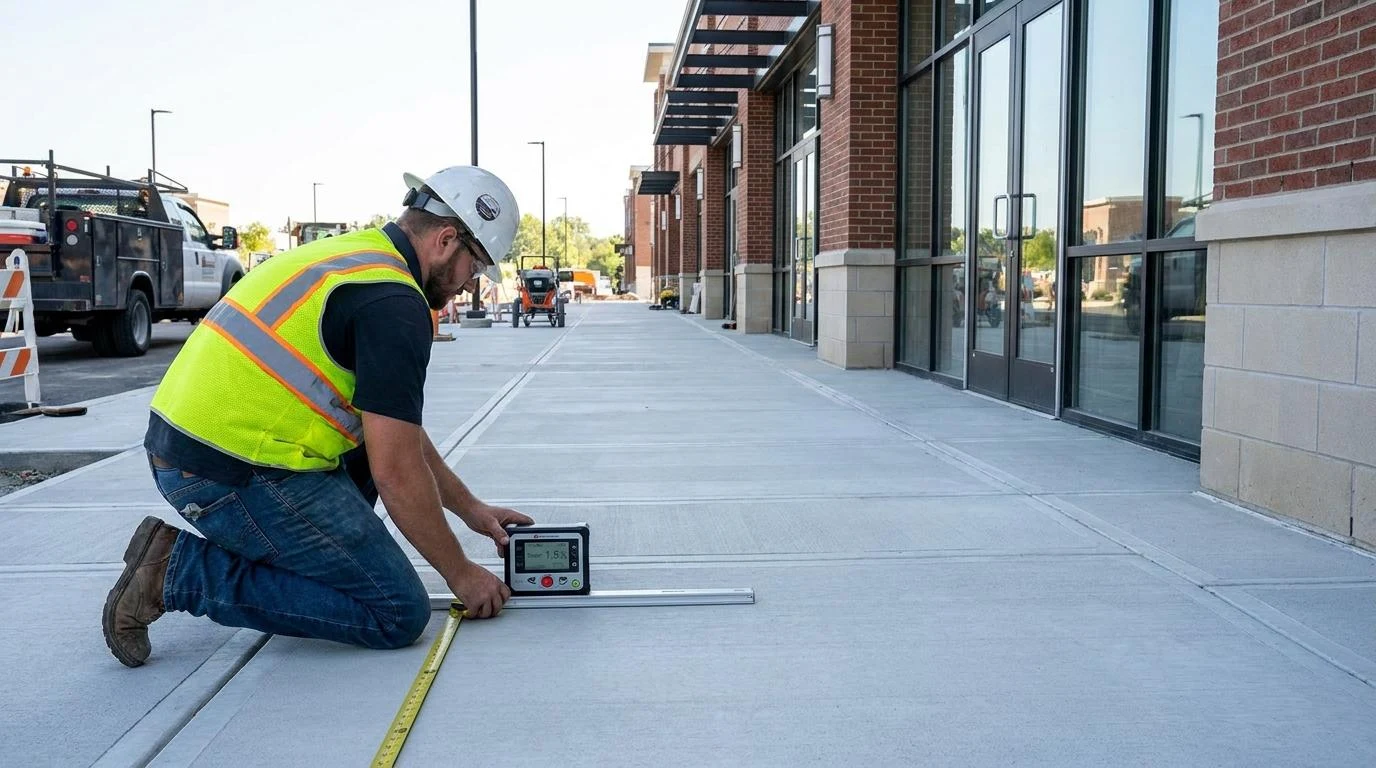
The ADA Standards for Accessible Design set precise measurements for every accessible route on a commercial property. These are federal requirements, not suggestions, and they apply to new construction, alterations, and resurfacing projects.
-
Running slope: Maximum 5% (1:20). Any section steeper than this is classified as a ramp and must meet separate ramp standards including handrails and landings.
-
Cross slope: Maximum 2% (1:48). This is the measurement most frequently violated on existing sidewalks because even minor settling can push it over the limit.
-
Clear width: Minimum 36 inches with passing spaces every 200 feet where the path is narrower than 60 inches.
-
Surface: Must be firm, stable, and slip-resistant. Vertical changes greater than 1/4 inch are classified as trip hazards.
Curb Ramps and Detectable Warnings
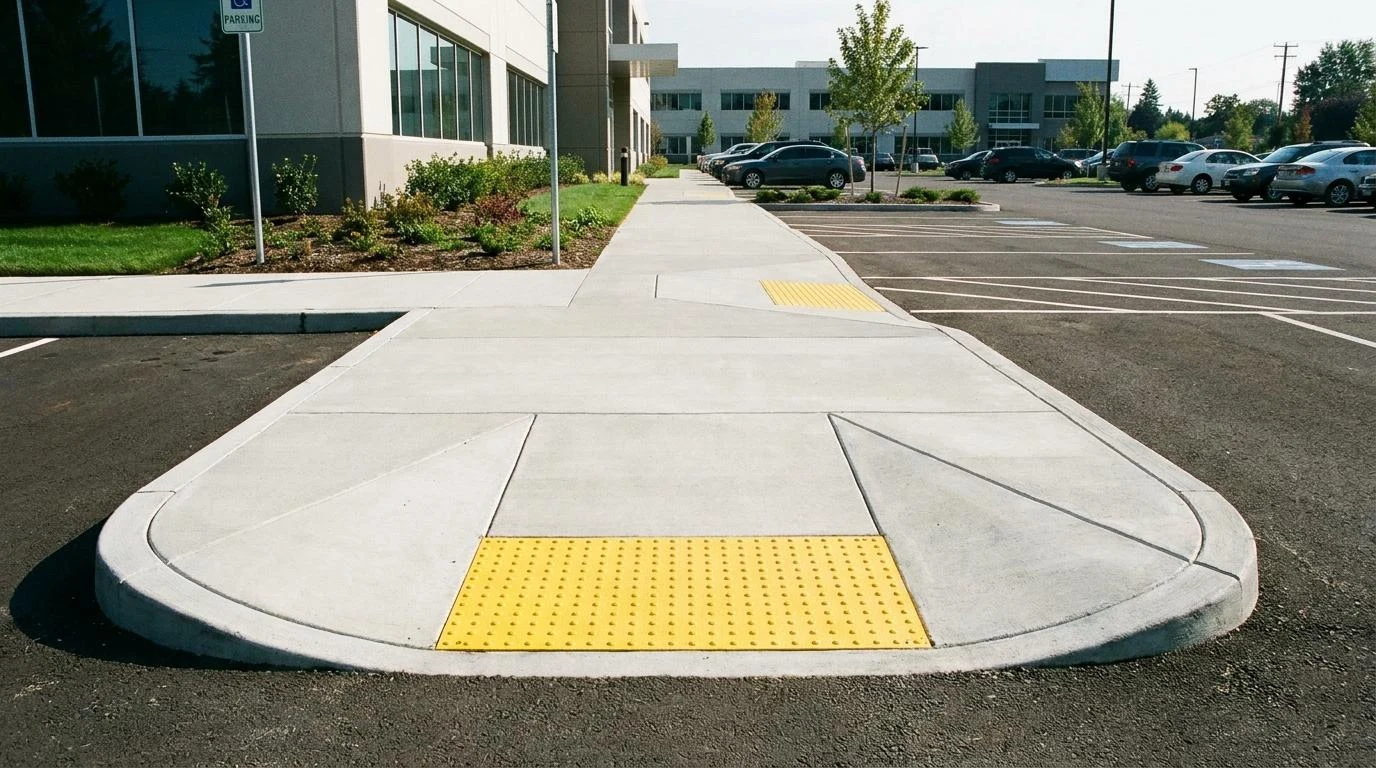
Curb ramps connect sidewalks to street crossings and parking areas. Every ramp must meet its own set of ADA specifications beyond the general sidewalk standards.
Curb Ramp Specifications
The maximum running slope for a curb ramp is 8.33% (1:12). The minimum clear width is 36 inches, and landings at the top and bottom must be at least 36 inches deep. Flared sides cannot exceed a 10% slope.
Detectable Warning Surfaces
Truncated dome panels are required at curb ramps where sidewalks transition to vehicular routes. Domes must be 0.2 inches tall with a base diameter of 0.9 to 1.4 inches and center-to-center spacing of 1.6 to 2.4 inches. The panel must extend at least 24 inches in the direction of travel and visually contrast with the surrounding surface. Commercial property owners calculating concrete and sidewalk installation costs should budget for these mandatory warning panels from the start.
Liability Risks for Non-Compliant Properties
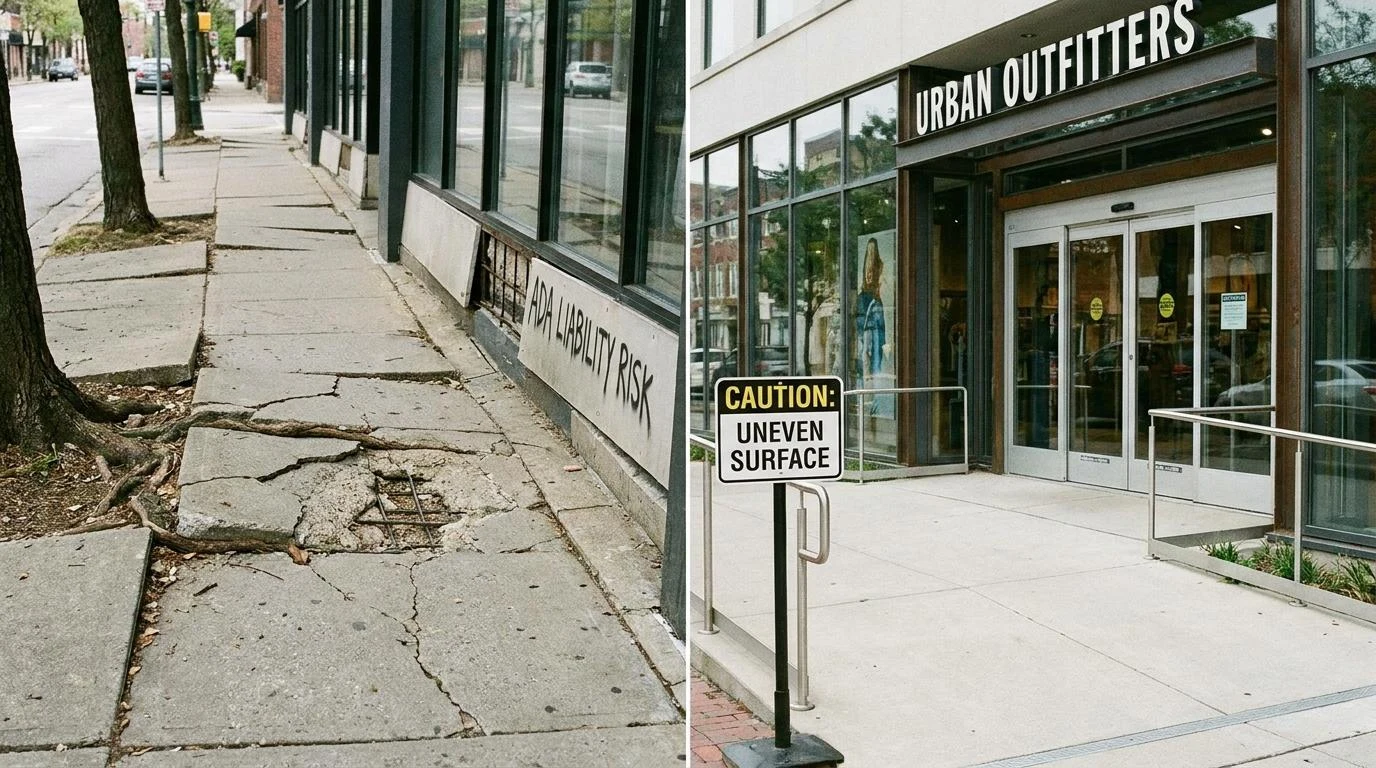
ADA violations expose commercial property owners to federal penalties and private lawsuits. First-offense civil penalties reach $75,000, and subsequent violations can cost up to $150,000. Private lawsuits typically result in attorney's fees, injunctive relief requiring immediate remediation, and settlement costs that routinely exceed $10,000.
In Fayette County, LFUCG reviews sidewalk compliance during permitting for new construction and major alterations. However, the risk isn't limited to the metro center; properties across Richmond and surrounding Central Kentucky commercial corridors face increasing scrutiny as accessibility enforcement and private compliance audits expand.
Frequently Asked Questions
What Is the Maximum Slope for an ADA Sidewalk?
The maximum running slope for an ADA-compliant sidewalk is 5% (1:20), and the maximum cross slope is 2% (1:48). Any sidewalk section that exceeds the 5% running slope threshold is reclassified as a ramp under ADA standards and must include handrails, edge protection, and level landings. Cross slope violations are the most common compliance failure on commercial properties.
Do Existing Sidewalks Need to Meet Current ADA Standards?
Existing sidewalks must meet current ADA standards when the property undergoes alterations that affect the path of travel or when a complaint triggers an accessibility review. Routine maintenance like crack sealing and patching doesn't trigger a full compliance upgrade, but resurfacing, repaving, or adding new sections does. Commercial property owners should assess existing sidewalks proactively rather than waiting for a complaint to force emergency remediation.
How Much Does It Cost to Make Sidewalks ADA Compliant?
Bringing existing commercial sidewalks into ADA compliance typically costs $8 to $20 per square foot for removal and replacement, plus $200 to $600 per detectable warning panel at curb ramps. CAG Enterprises self-performs all concrete work on commercial ADA projects, from demolition through final slope verification, which eliminates subcontractor markups and scheduling delays.
Keep Your Property Compliant
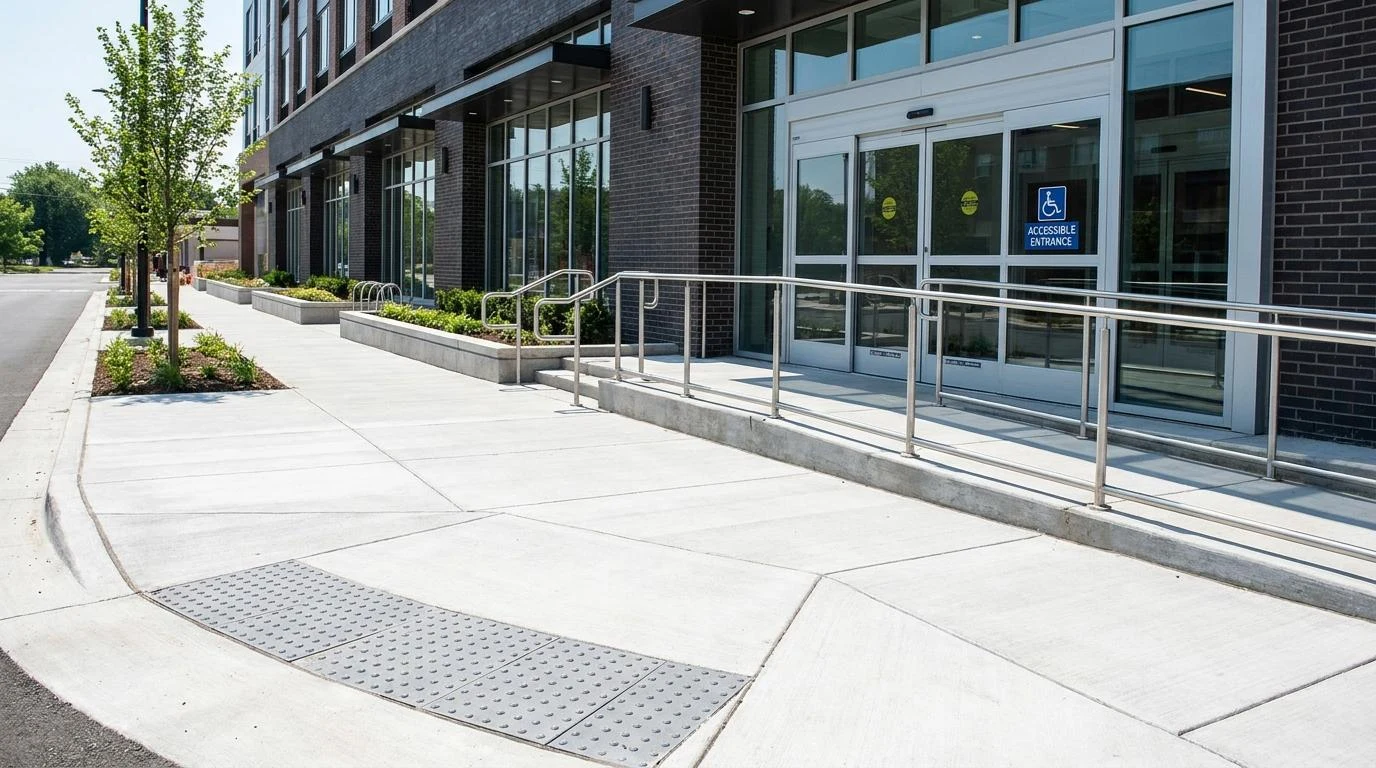
ADA sidewalk compliance isn't optional for commercial properties, and the cost of remediation after a violation is always higher than building to spec from the start. Slope tolerances, curb ramp geometry, and detectable warning surfaces all have specific numbers that must be met on every accessible route. A proactive assessment catches problems before they become complaints.
Contact CAG Enterprises at (859) 983-5799 for a free ADA sidewalk compliance assessment.