
Decorative Concrete
Stamped Concrete
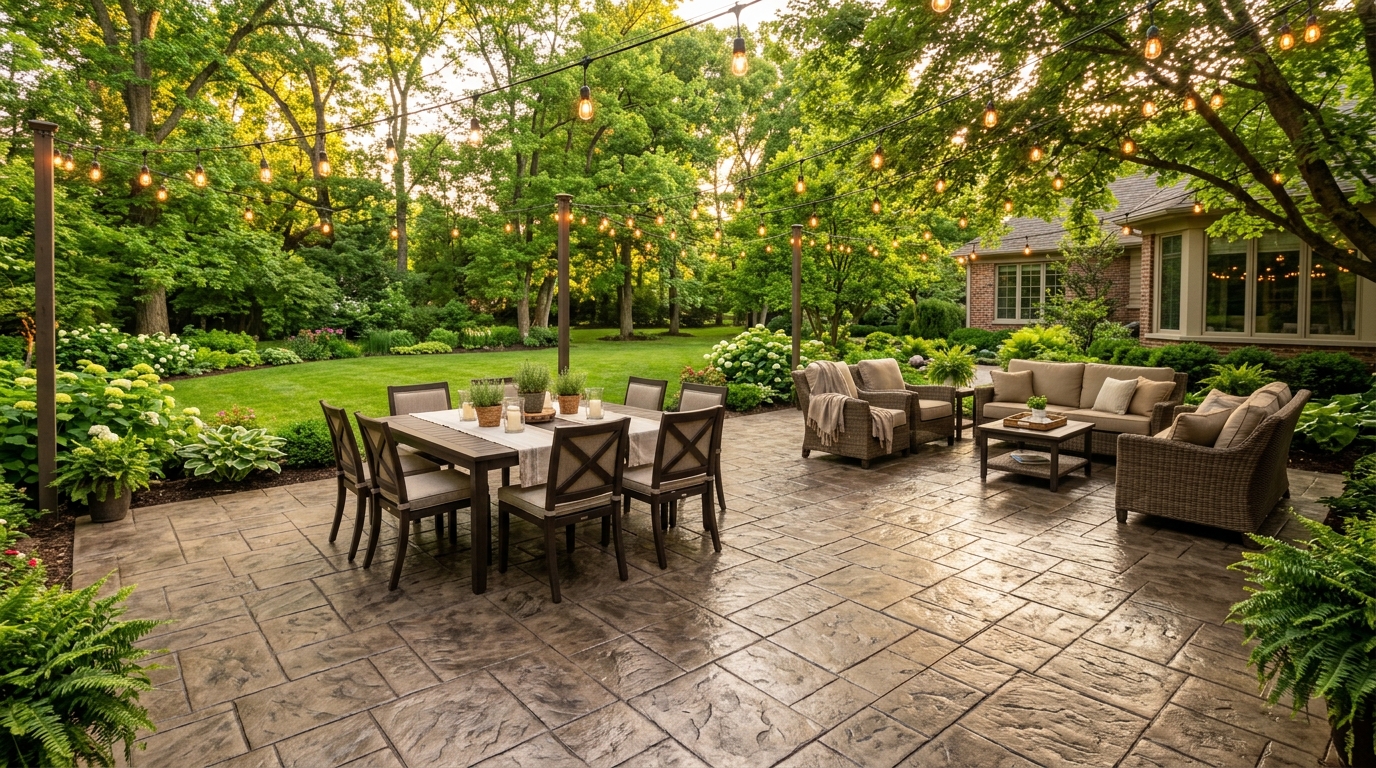
Natural stone patios run $30-$50 per square foot — and individual pavers shift, settle, and grow weeds within a few seasons on Bluegrass clay. Stamped concrete delivers the same high-end appearance as a single, reinforced slab at a fraction of the cost. CAG Enterprises has installed stamped concrete across Central Kentucky for over 25 years.
Free Pattern ConsultationWhat Is Stamped Concrete?
The Look of Stone. The Strength of Concrete.
Stamped concrete starts as a standard concrete pour — properly graded base, compacted subgrade, steel reinforcement, and a mix designed for Central Kentucky's freeze-thaw cycles. Before the concrete sets, our crew presses textured mats into the surface to replicate the look of stone, slate, brick, or wood plank.
The installation follows a specific sequence: pour and screed the slab, apply integral color and color hardener, press the stamp mats while the concrete is at the right plasticity, remove the mats, wash the surface, and apply a protective sealer. The timing of each step matters — stamp too early and the pattern distorts, too late and the concrete won't take the impression.
Pattern Catalog
Stamped Concrete Patterns
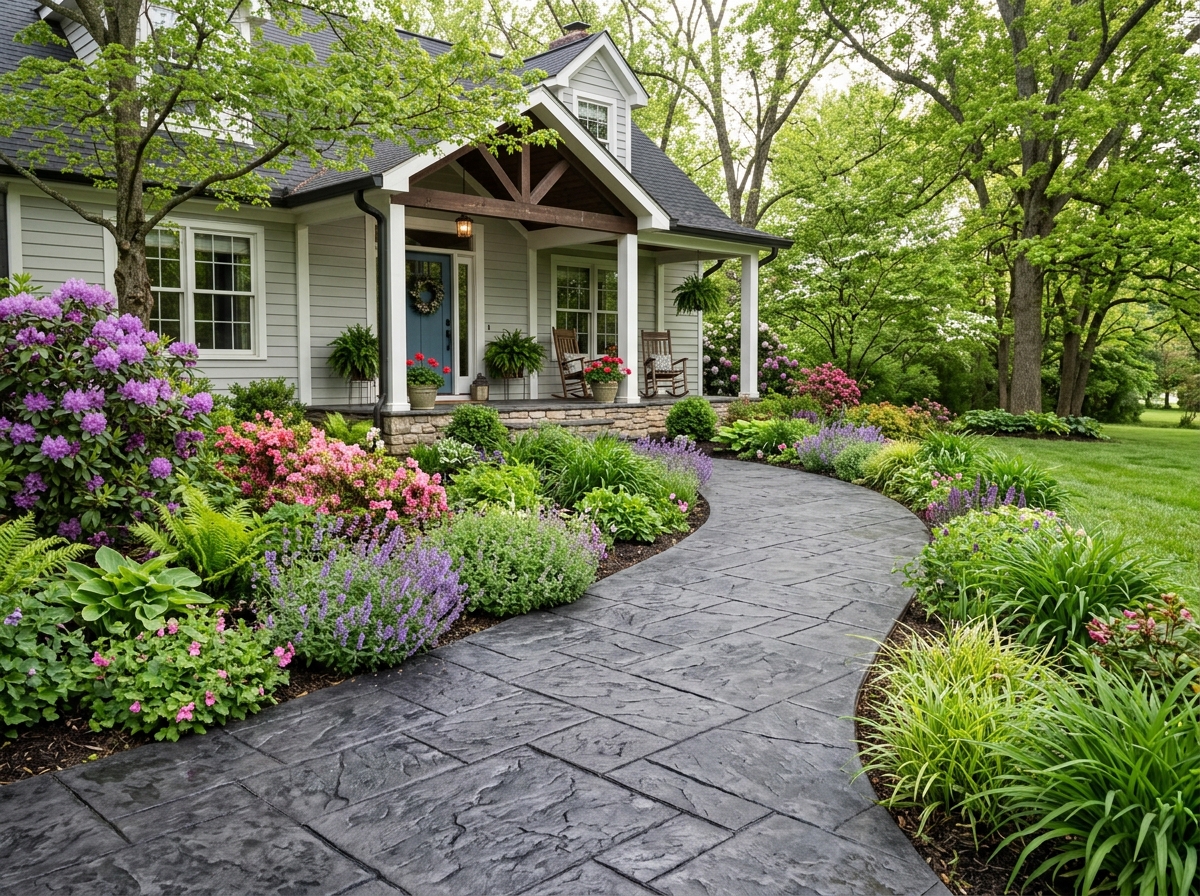
CAG offers dozens of stamp patterns matched to Central Kentucky architecture — from historic downtown Lexington homes to new construction in Georgetown.
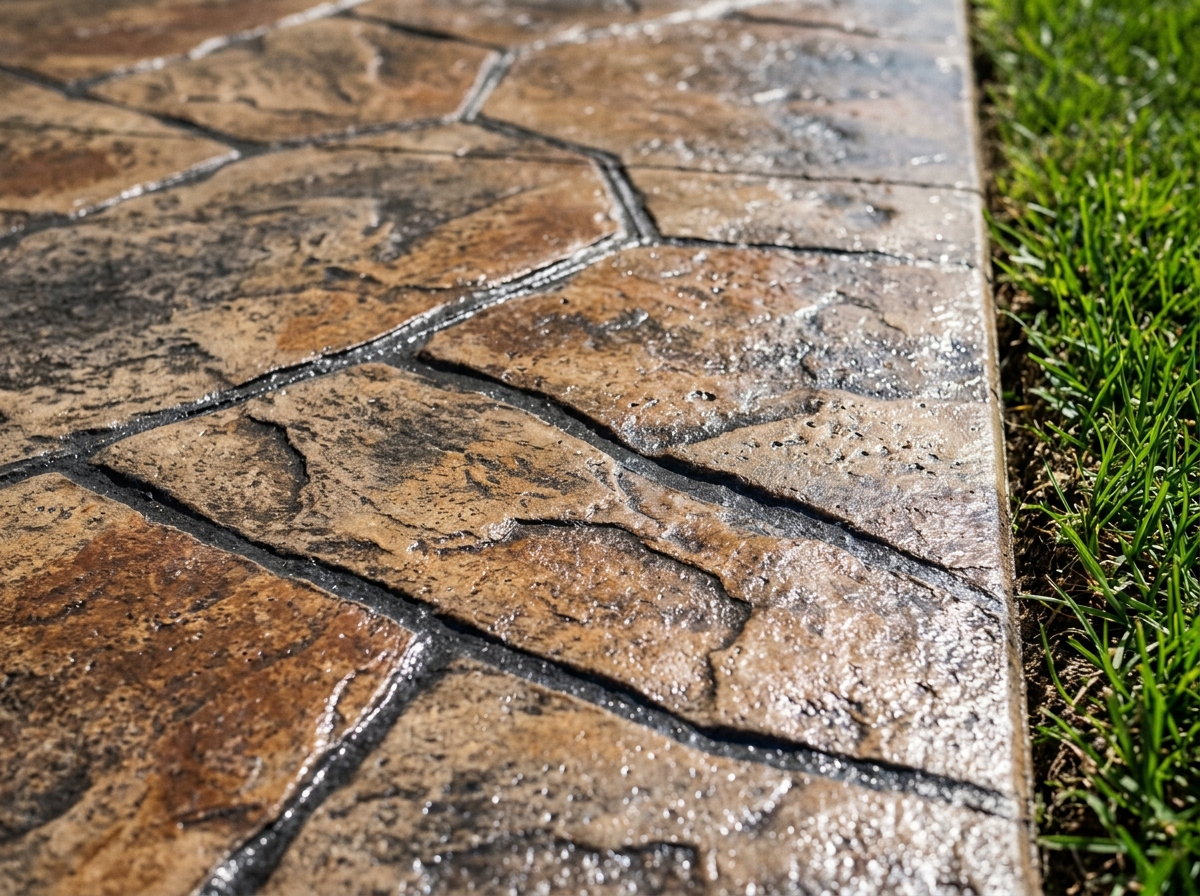
Ashlar Slate
The most popular pattern in Central Kentucky. Ashlar slate replicates the look of cut stone with rectangular shapes in a staggered layout. Works well on patios, walkways, and pool decks.
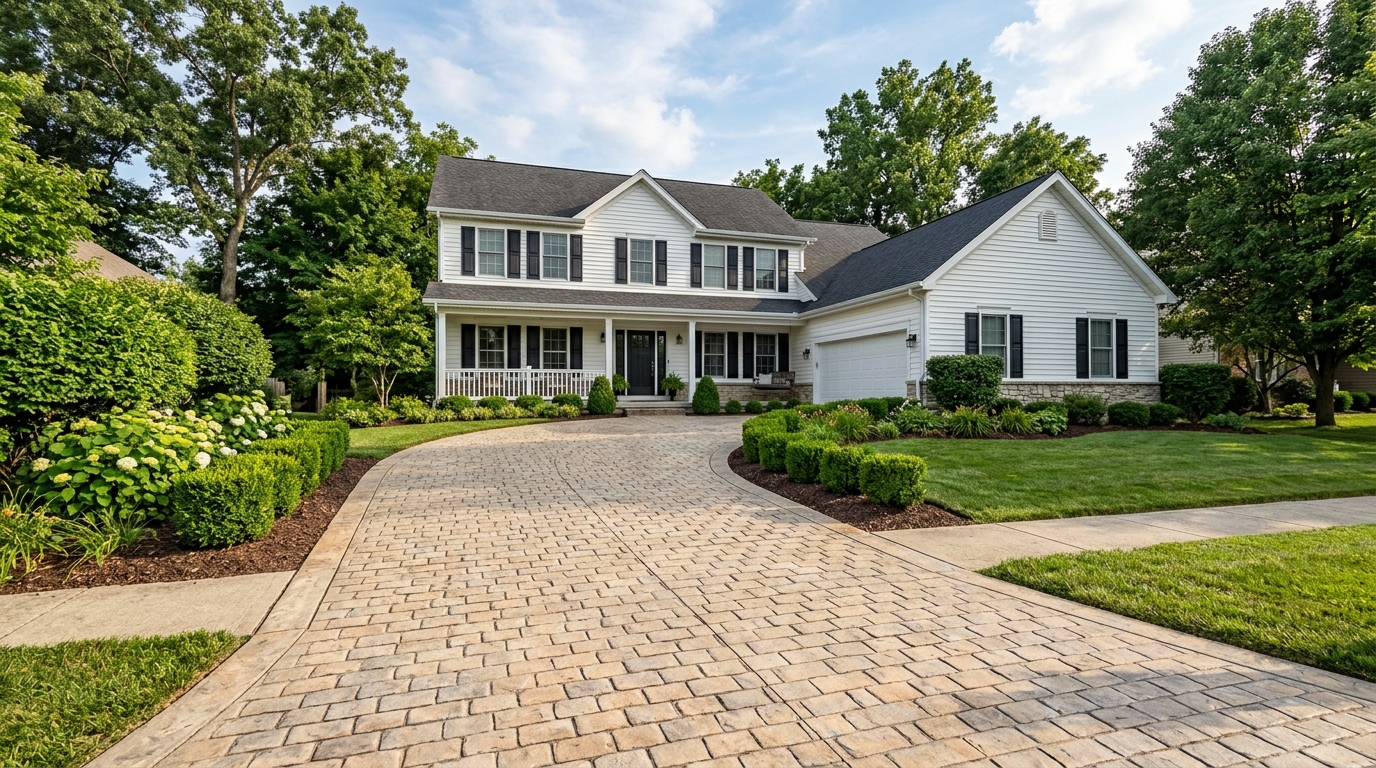
Cobblestone
Classic European cobblestone appearance with rounded, interlocking shapes. A top choice for driveways and entryways that demand a traditional, old-world feel.
Wood Plank
Realistic wood grain texture without the rot, warping, or termite concerns. Ideal for porches, patios, and pool decks where you want the warmth of wood with the durability of concrete.
Brick Running Bond
Traditional brick pattern that complements historic downtown Lexington homes and colonial architecture. Available in classic red, charcoal, and tan color combinations.
Flagstone
Irregular, natural-looking stone shapes that blend seamlessly with landscape designs. Perfect for curved walkways and organic patio layouts around gardens and pools.
Why Stamped Concrete?
The Smart Choice for Central Kentucky
Stamped concrete hits the middle ground for most homeowners: it looks like stone, lasts decades with basic maintenance, and costs significantly less than individual pavers or cut flagstone.
Cost-Effective vs. Natural Stone
Stamped concrete typically costs 30-50% less than interlocking pavers and a fraction of cut flagstone. A 400-square-foot stamped patio pours in a day; the same area in pavers takes three to four days.
Fully Customizable
Choose from dozens of patterns and a four-layer color system that creates the depth and variation of real stone. Match your home's architecture, from historic Lexington to new construction in Georgetown.
Built to Last
A properly installed stamped concrete slab lasts 25-30 years in Central Kentucky's climate. The reinforced, monolithic slab won't shift, settle, or grow weeds like individual pavers on Bluegrass clay.
Low Maintenance
No weeds between joints, no pavers to relevel, no individual stones to replace. Reseal every 2-3 years and keep the surface clean — that's all it takes to maintain the look for decades.
Our Process
How We Install Stamped Concrete
Every stamped concrete project follows a precise sequence. Timing, preparation, and experience determine the final result.
Consultation & Pattern Selection
We visit your property, assess soil and site conditions, and walk you through pattern and color options. You see physical samples before any work begins.
Site Preparation & Forming
Excavation to stable subgrade, compaction in lifts, proper base material, and precise forming. The work you never see determines how long the work you do see lasts.
Pour, Color & Stamp
We pour the reinforced slab, apply integral color and color hardener, then press textured stamp mats at exactly the right plasticity. Timing is everything.
Detail Work & Control Joints
Stamp mats are removed, edges are hand-detailed, and control joints are cut to follow the pattern lines — not through them. Accent release color is applied for depth.
Wash, Seal & Protect
The surface is washed to reveal the color contrast, then sealed with a high-quality acrylic sealer mixed with non-slip additive for grip and long-term protection.
Where We Work
Stamped Concrete Across Central Kentucky
Based in Lexington, our crews install stamped concrete across the Bluegrass region. Select your city for location-specific details.
Common Questions
Stamped Concrete FAQ
What are the downsides of stamped concrete?
Is stamped concrete cheaper than pavers?
How long does stamped concrete last?
Can you stamp existing concrete?
Does stamped concrete get slippery?
What is the best time to install stamped concrete in Kentucky?
Ready for a Stunning
Stamped Concrete Project?
Get a free on-site estimate with pattern samples and color options tailored to your property.
Get Your Free EstimateQuality concrete is just a call away.