The most common types of retaining walls used in Central Kentucky include gravity walls, cantilever (poured concrete) walls, and block (CMU) walls—each engineered to handle specific heights, load requirements, and soil conditions. While walls under 4 feet can often utilize simpler layouts, anything taller requires a certified engineered plan. To help property owners navigate these structural demands, CAG Enterprises builds durable poured concrete and block retaining walls tailored to the unique terrain of Fayette, Scott, Madison, Woodford, and Jessamine counties.
As late spring rolls around, many Central Kentucky property owners begin noticing the toll that winter runoff has taken on their landscape, whether it's visible soil erosion on a hillside or an old wall that’s suddenly leaning. This is the prime season for grading and dirt work, making it the perfect time to address those shifting slopes. To help you choose the right fix for your landscape, we break down the most reliable gravity, cantilever, block, and anchored retaining wall options for local properties below.
Gravity Retaining Walls
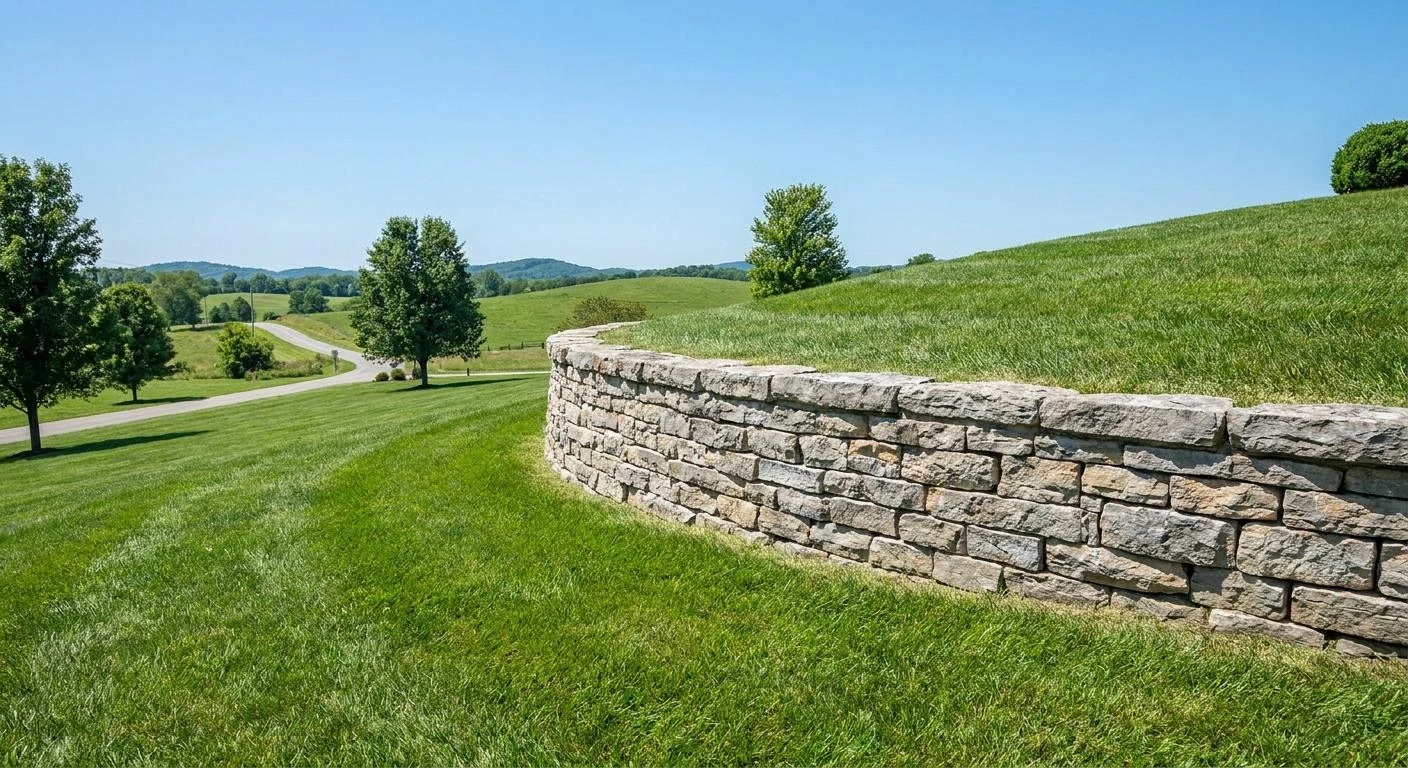
Gravity walls rely on their own mass to resist lateral soil pressure. They're typically built from stacked stone, large concrete blocks, or poured concrete with a wide base that tapers toward the top.
These walls work best for height under 4 feet on moderate slopes. They don't require steel reinforcement or deep footers, which makes them the simplest and often least expensive option for garden borders, low terraces, and property line definition. On Central Kentucky's clay, proper drainage behind a gravity wall is still essential to prevent hydrostatic pressure from pushing the mass forward.
Cantilever (Poured Concrete) Walls
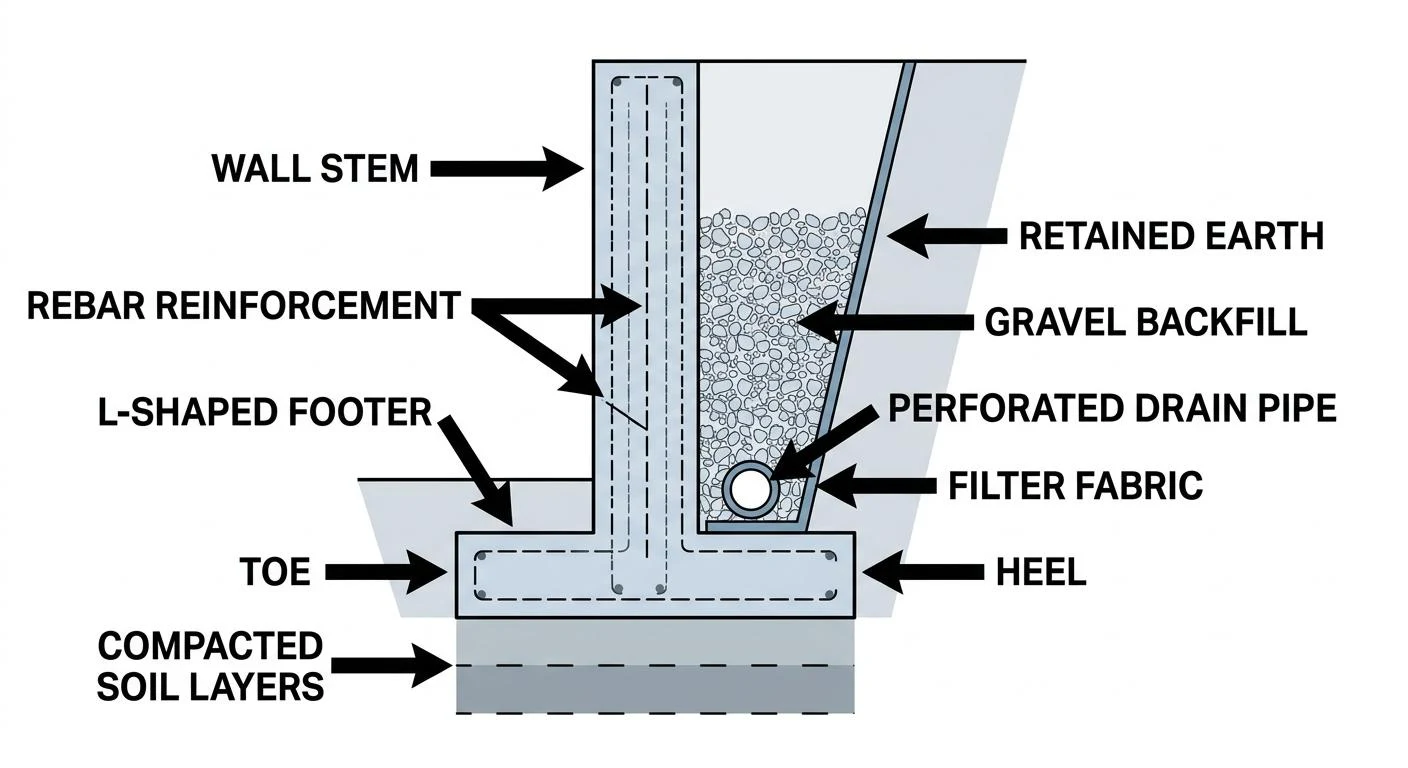
Cantilever walls use an L-shaped or inverted-T footer that extends back under the retained soil. The weight of the soil sitting on the footer's heel counteracts the lateral pressure against the wall face, which allows a thinner wall profile than a gravity design.
This is the standard engineered wall type for heights above 4 feet in Central Kentucky. Poured concrete cantilever walls handle the tallest residential and commercial retaining applications, and their performance in the region's clay soil is well-documented. Property owners comparing retaining wall costs in Central Kentucky will find that cantilever walls cost more per linear foot but require less material than a gravity wall at the same height.
Block (CMU) Retaining Walls
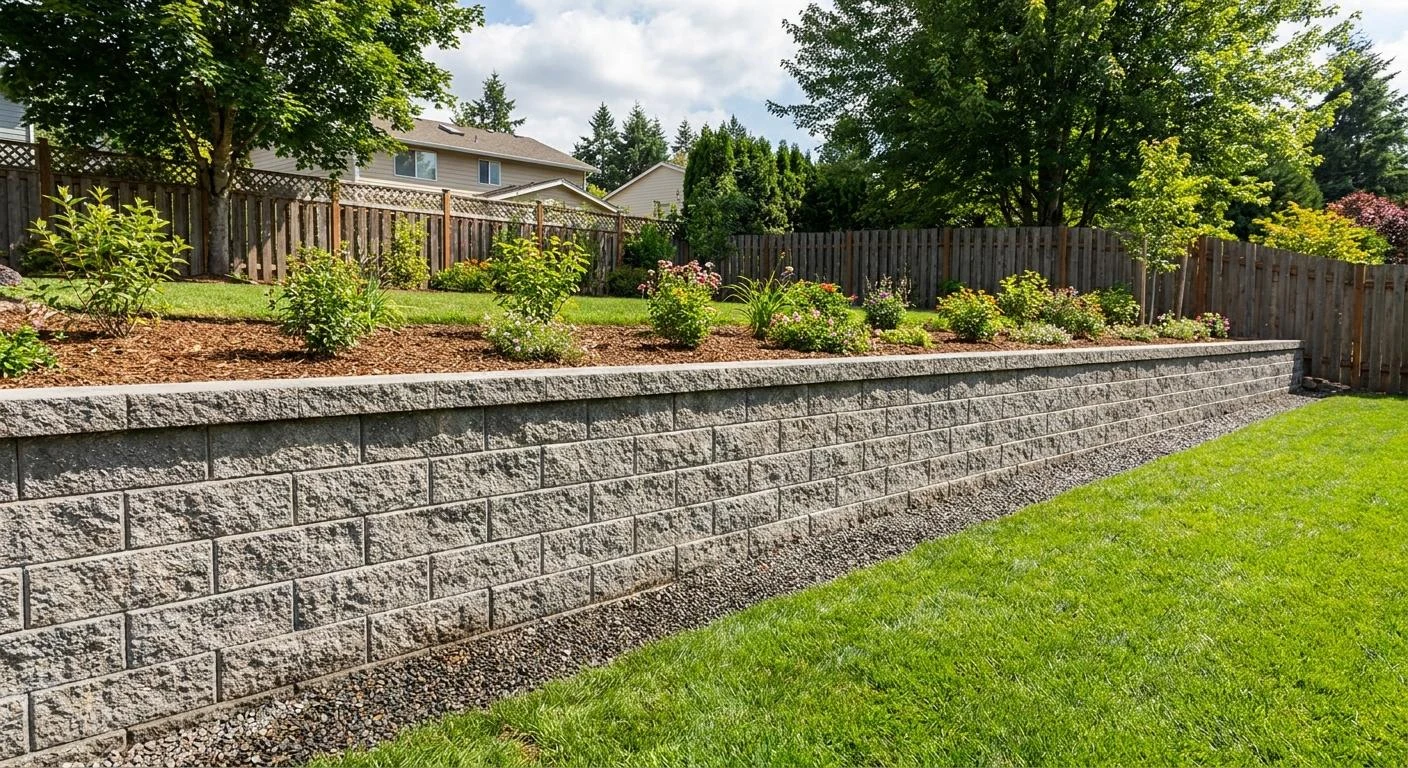
CMU block walls use interlocking or mortared concrete masonry units stacked on a leveled gravel base. For walls under 4 feet, standard block construction with gravel backfill and drainage pipe is usually sufficient without engineering.
Taller block walls need rebar-filled cores, concrete grout, and sometimes geogrid reinforcement tying the wall face back into the retained soil. Block walls offer more design flexibility than poured concrete because they come in split-face, ground-face, and textured options that create a finished appearance without additional forming or coating. Properties across Nicholasville and surrounding Central Kentucky communities use block walls for residential terracing, driveway borders, and garden walls where both function and appearance matter.
When Your Wall Needs Engineering
Most Central Kentucky jurisdictions require engineered drawings and a building permit for retaining walls taller than 4 feet, measured from the bottom of the footing to the top of the wall. Lexington (LFUCG) enforces stricter local rules: its permit guide lists fences and walls 24 inches or taller above grade as needing a permit, and any retaining wall 48 inches or taller requires an engineer's certification on the structural drawings. Walls near buildings, property lines, or slopes with surcharge loads may need engineering at lower heights regardless of jurisdiction.
Drainage is non-negotiable regardless of wall type. Every retaining wall on Central Kentucky clay needs gravel backfill, filter fabric, and perforated drain pipe routed to daylight. Without drainage, hydrostatic pressure builds behind the wall and causes failure regardless of how well the wall itself is built.
Frequently Asked Questions
What Is the Strongest Type of Retaining Wall?
Poured concrete cantilever walls are the strongest retaining wall type for most residential and commercial applications. The L-shaped footer uses the weight of the retained soil to counteract lateral pressure, which allows the wall to resist higher loads with a thinner profile than gravity designs. In Central Kentucky, cantilever walls are the standard choice for walls above 4 feet on clay slopes.
How Tall Can a Retaining Wall Be Without Engineering?
Most Central Kentucky jurisdictions allow retaining walls up to 4 feet tall without engineered drawings or a building permit, measured from the bottom of the footing to the top of the wall. Lexington (LFUCG) enforces stricter local rules: its permit guide lists fences and walls 24 inches or taller above grade as needing a permit. Any retaining wall 48 inches or taller requires an engineer's certification on the structural drawings. Confirm the exact requirements with LFUCG or your local jurisdiction before construction starts.
Do All Retaining Walls Need Drainage?
Every retaining wall needs drainage behind it, regardless of type, height, or material. Gravel backfill, filter fabric, and perforated drain pipe are standard components on every properly built wall. CAG Enterprises includes integrated drainage on all retaining wall projects because Central Kentucky's clay soil generates significant hydrostatic pressure when saturated after rain events.
Match the Wall Type to Your Terrain
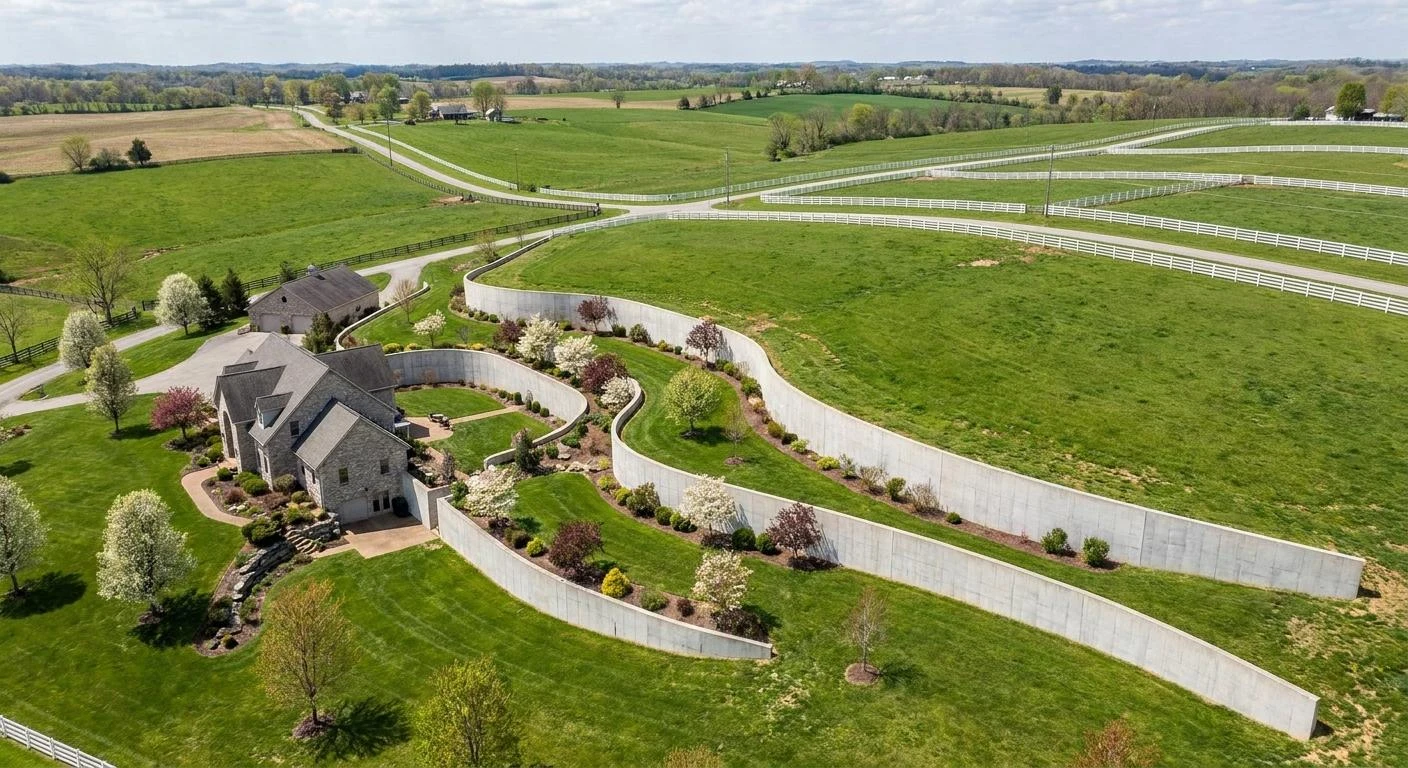
The right retaining wall depends on how high you need to build, your budget, and whether your project hits that critical 4-foot local engineering threshold. Simple gravity designs work great for small garden terraces, while poured concrete cantilever walls offer the pure structural strength needed for heavy slopes. Elegant block walls provide an excellent middle ground when you want durability and curb appeal. No matter which style you choose, investing in proper, deep drainage is the single most important step to keep your wall standing strong against Central Kentucky's tough clay soil.
Contact CAG Enterprises at (859) 983-5799 for a free retaining wall consultation.