Concrete driveway maintenance involves four annual tasks, each performed by season, based on the conditions the slab withstands. Wash off the salt in spring, check the joints in summer, seal before the first freeze in fall, and use the right de-icer in winter. Do all four and a driveway in Central Kentucky can reach 30 years. Skip them and the same slab can start spalling by year eight.
The reason it matters this much here is the freeze-thaw calendar, which runs from late October through early April. Moisture pushes water deeper into the concrete with every cycle. The mix you poured isn't what separates a 15-year driveway from a 30-year one; the upkeep is. CAG Enterprises has been pouring concrete driveways across Lexington and the Bluegrass since 2001. The advice below comes from watching how local slabs actually age. Here's what to do each season, and why skipping one undoes the work of the other three.
Spring: Wash Off Winter and Inspect for Damage
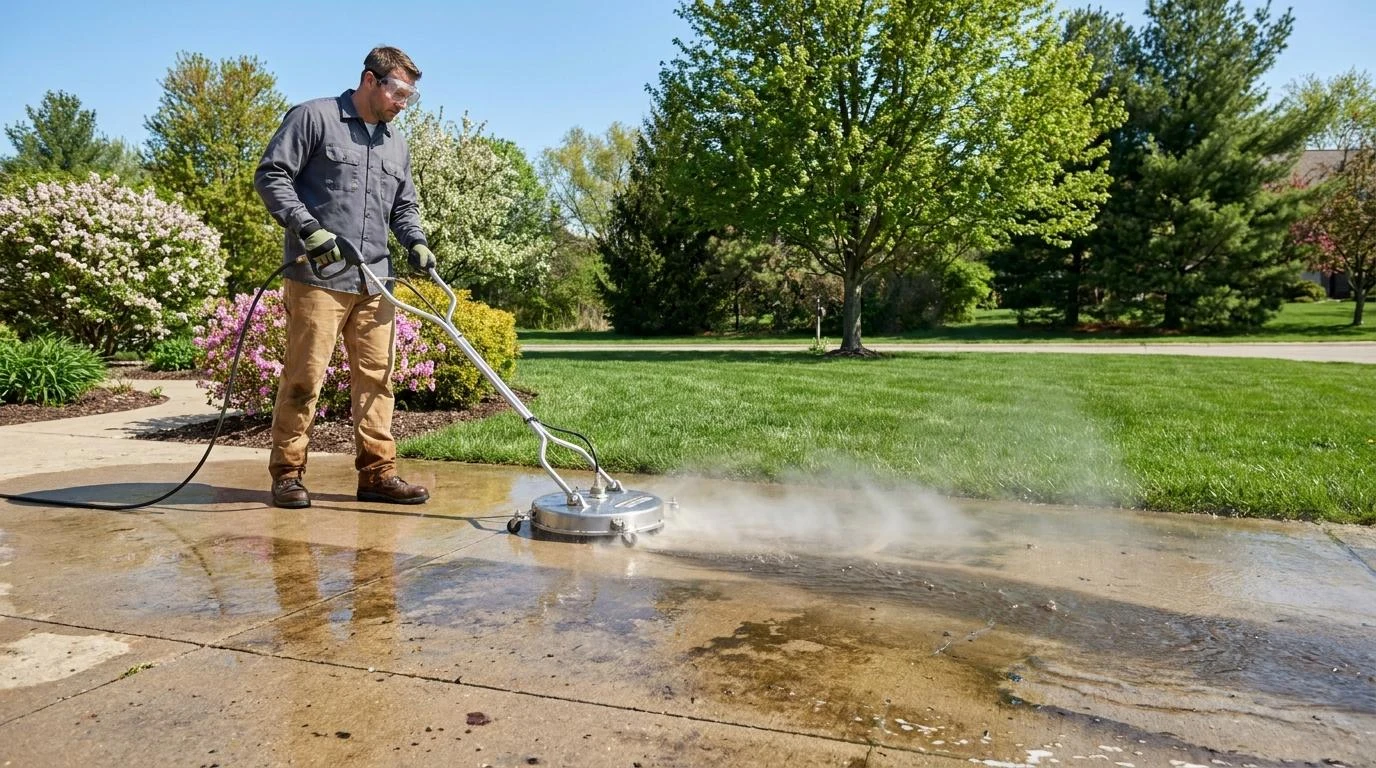
March and April are when freeze-thaw damage reveals itself. Walk the driveway and look for new cracks, spalling along edges, and control joints that widened over winter. Mark anything wider than an eighth of an inch. Those need attention before the next freeze season.
Pressure-wash the entire surface to remove salt residue and grime. Use a fan-tip nozzle at 2,500 to 3,000 PSI, which is enough to clean without etching. Let the driveway dry completely before applying crack filler. CAG's residential services include spring crack assessments for homeowners who want a professional eye on winter damage.
Summer: Inspect Joints and Keep the Surface Clean
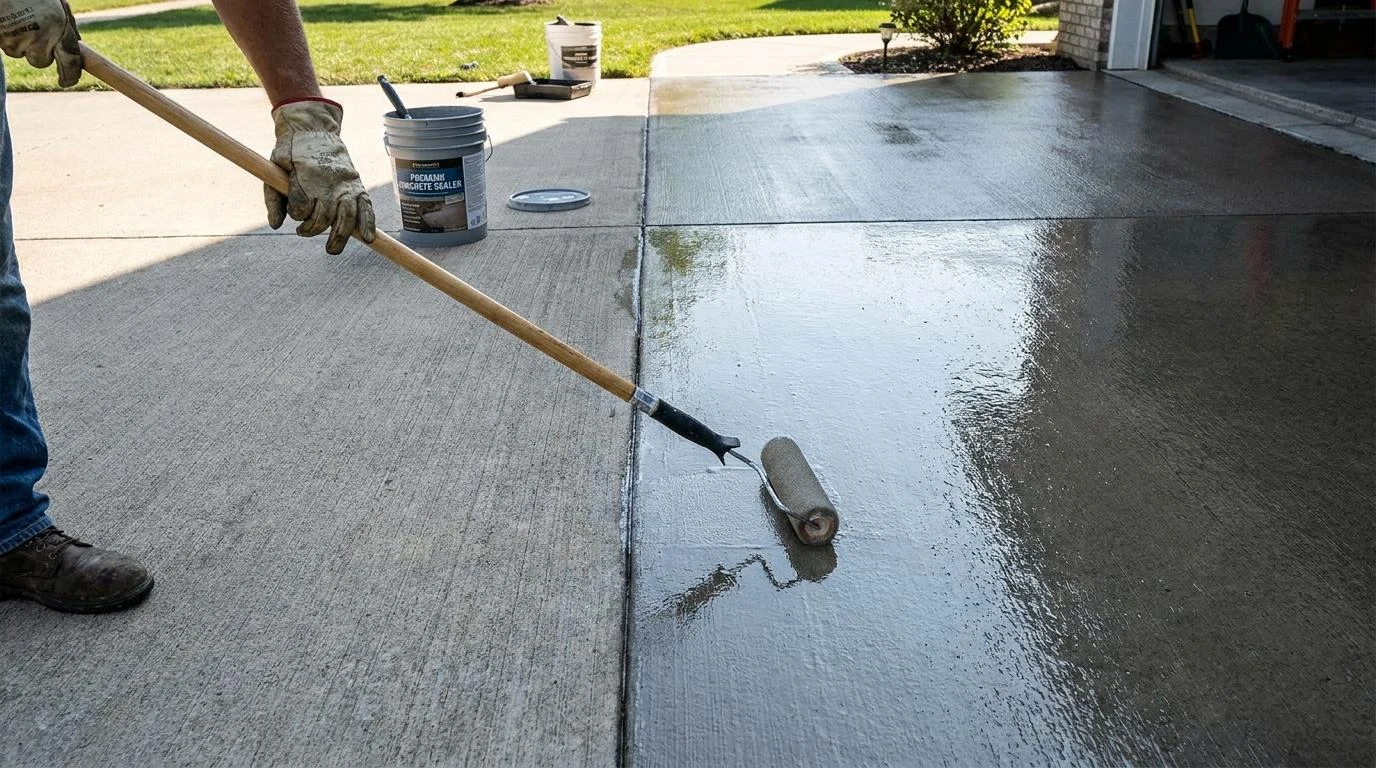
Summer heat expands the slab, and control joints absorb that movement. Walk the driveway in June or July and check that every joint is free of debris, packed dirt, grass clippings, and gravel. They prevent the joint from closing, redirecting pressure into the concrete.
Summer is also the time to clean organic stains: leaf tannins, mulch runoff, tree sap. A mild detergent and stiff-bristle brush handles most surface stains. If you're seeing new cracks in your concrete driveway that weren’t there last spring, summer’s warm and dry conditions allow the crack filler to fully cure in time for sealing in fall.
Fall: Seal Before the First Freeze
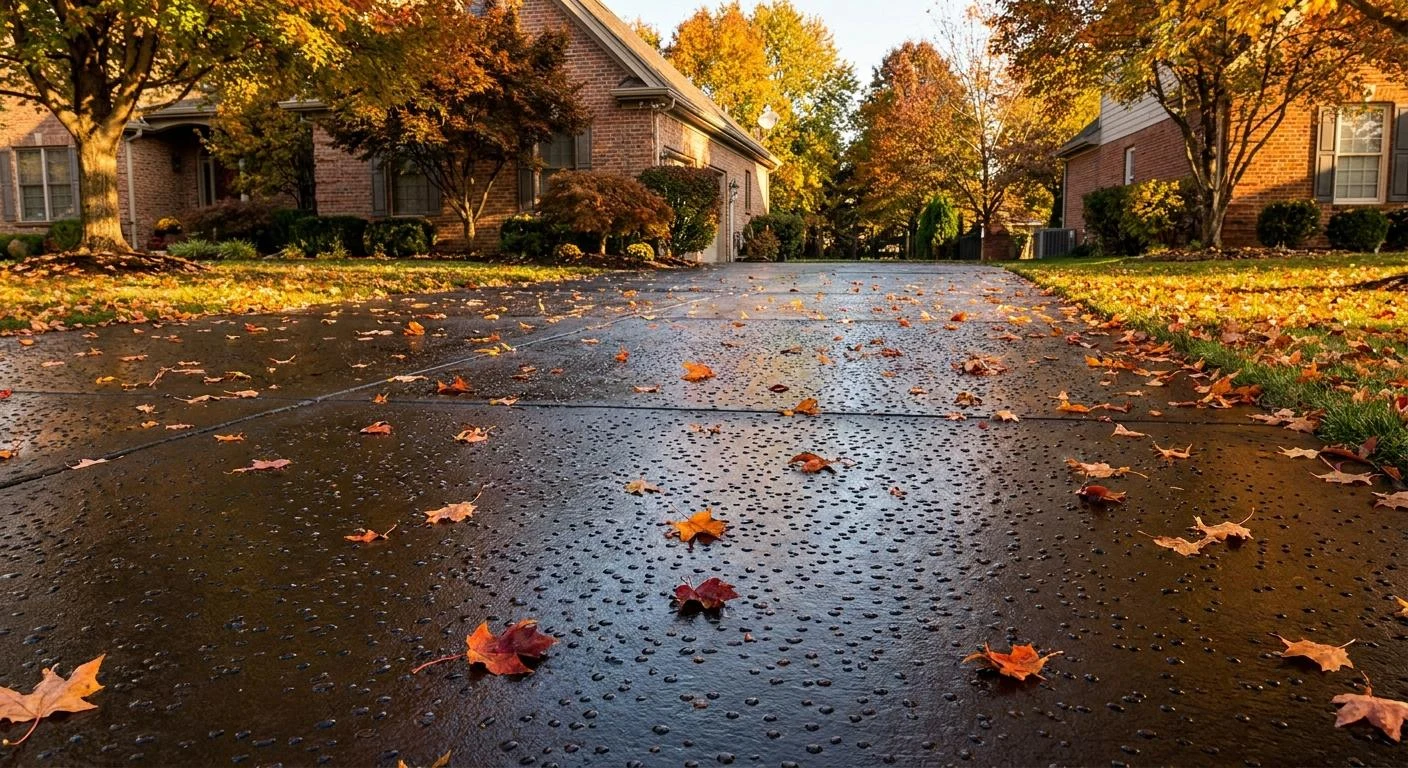
September and October are optimal sealing months in Central Kentucky. For a Versailles driveway, that means getting the sealer down before the first hard freeze arrives in late October. Daytime temperatures between 50°F and 70°F let penetrating silane or siloxane sealer cure properly. Sealing before the first hard freeze locks water out of the concrete's pore structure. A quality sealer lasts 3 to 5 years.
If water no longer beads on the surface after rain, the sealer has worn through. CAG recommends penetrating sealers over film-forming acrylics since film formers peel under freeze-thaw cycling. A driveway replacement is the right call when cracks have multiplied past the point where sealing buys meaningful protection.
Winter: Choose the Right De-Icer and Manage Snow Carefully
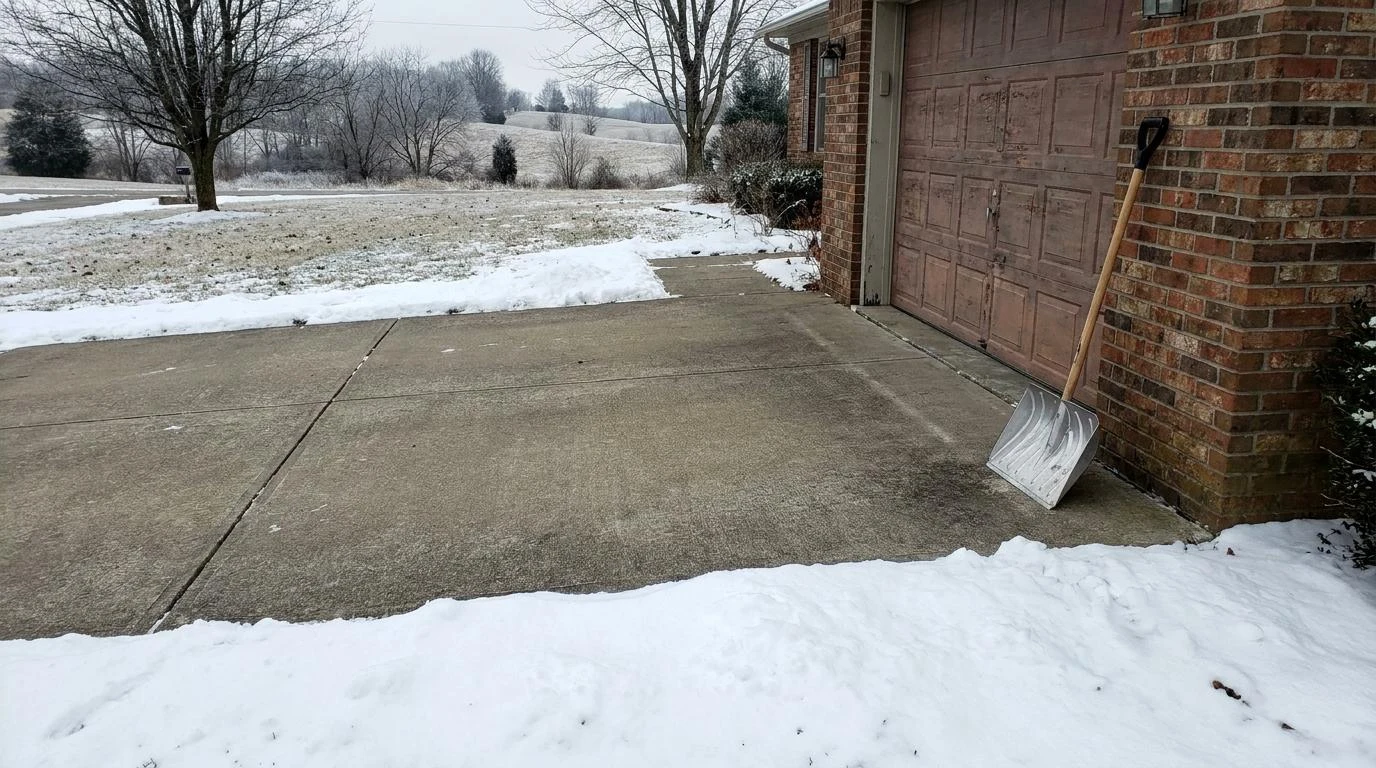
Central Kentucky winters are mild enough that concrete work continues year-round, but a few ice events still call for de-icing. Here's the honest truth: no chloride de-icer is genuinely safe for concrete. They all eat at the slab in different ways. The safest options on a sealed, fully cured driveway are plain sand for traction or calcium magnesium acetate (CMA), which doesn't react with cement paste. Both cost more than the cheap bag at the hardware store, which is why most homeowners reach for rock salt instead.
If you do use a chloride product, use as little as possible. Sodium chloride (rock salt) is the most familiar and the gentlest of the chlorides, though it still corrodes rebar and speeds up freeze-thaw damage over time. Calcium chloride and magnesium chloride melt ice faster in deep cold, but they actually attack cement paste more aggressively than rock salt. They aren’t the gentle alternatives some homeowners think. Skip de-icers entirely on a driveway in its first winter, and the new concrete which hasn't fully cured will be much more vulnerable to chemical damage.
When shoveling, use a plastic shovel or a metal shovel with a rubber edge. Bare metal scrapes the sealer. Never chip at ice with a metal pick. That's the fastest way to spall a driveway edge.
Frequently Asked Questions
How often should I seal my concrete driveway in Kentucky?
Seal a concrete driveway in Central Kentucky every 3 to 5 years with a penetrating silane or siloxane sealer. Test by sprinkling water on the surface, if it beads, the sealer is working. If it soaks in, it's time to reseal. Fall is ideal, with daytime temperatures in the 50°F to 70°F range.
Should I pressure wash my concrete driveway?
Yes, use a fan-tip nozzle at 2,500 to 3,000 PSI and keep the wand moving. Pressure wash in spring to remove salt and grime, and spot-clean through summer and fall. Avoid pressure washing within 30 days of sealing, and never use a zero-degree nozzle, which can cut the surface.
What's the best de-icer for a concrete driveway?
No chloride de-icer is truly safe for concrete. The best options for a sealed driveway are plain sand for traction or calcium magnesium acetate (CMA), which doesn't react with cement paste. If you must use a chloride product, sodium chloride (rock salt) is the gentlest of them, though it still corrodes rebar over time. Calcium chloride and magnesium chloride melt ice faster but actually attack cement paste more aggressively. Avoid ammonium nitrate and ammonium sulfate entirely since they attack concrete the fastest.
A Season-by-Season Plan That Keeps Your Driveway Solid
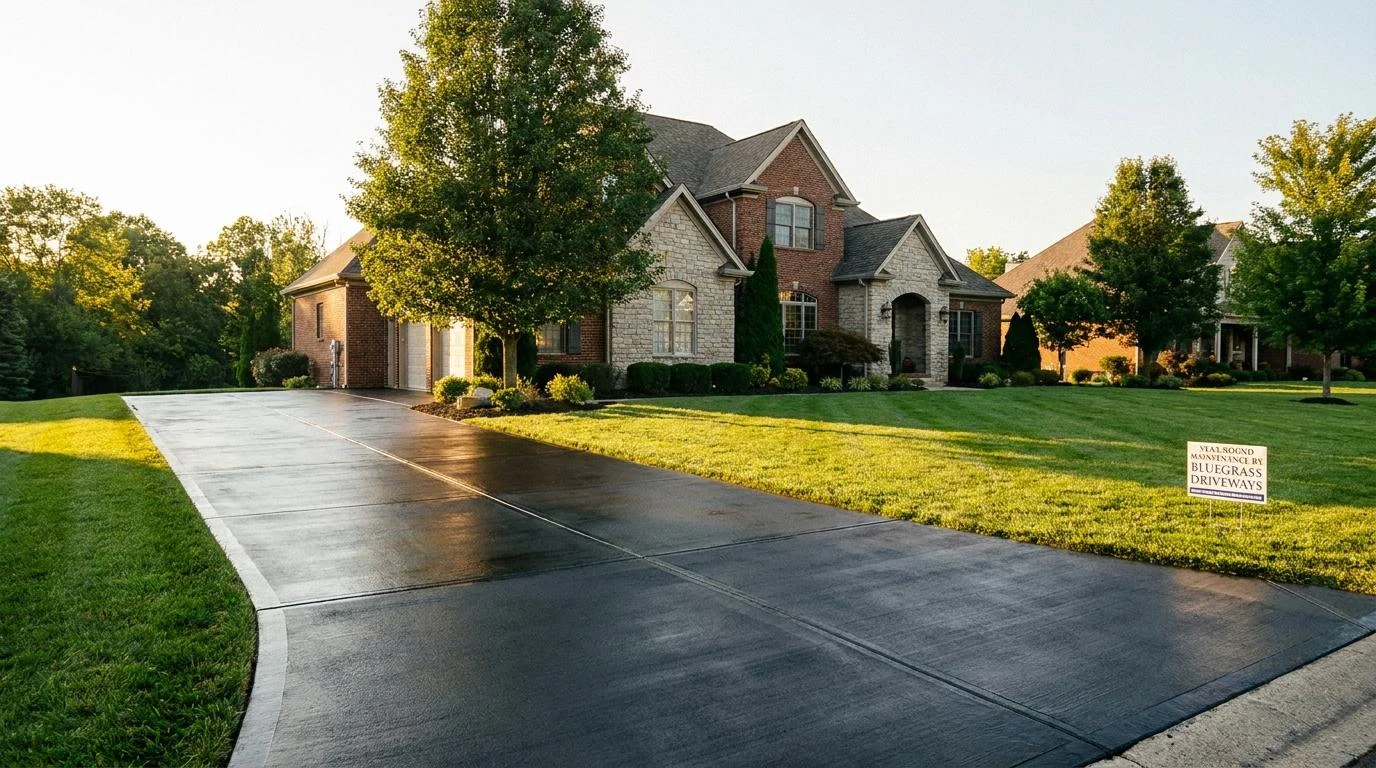
Concrete driveway maintenance isn't complicated. It's seasonal. Wash in spring, inspect in summer, seal in fall, and use the right de-icer in winter. Four steps, each tied to a specific window on the Central Kentucky calendar, and the payoff is a driveway that reaches 30 years instead of 15.
For a free assessment of your driveway's condition, call (859) 983-5799. The CAG team will walk the driveway with you and tell you what it needs this season and the next.