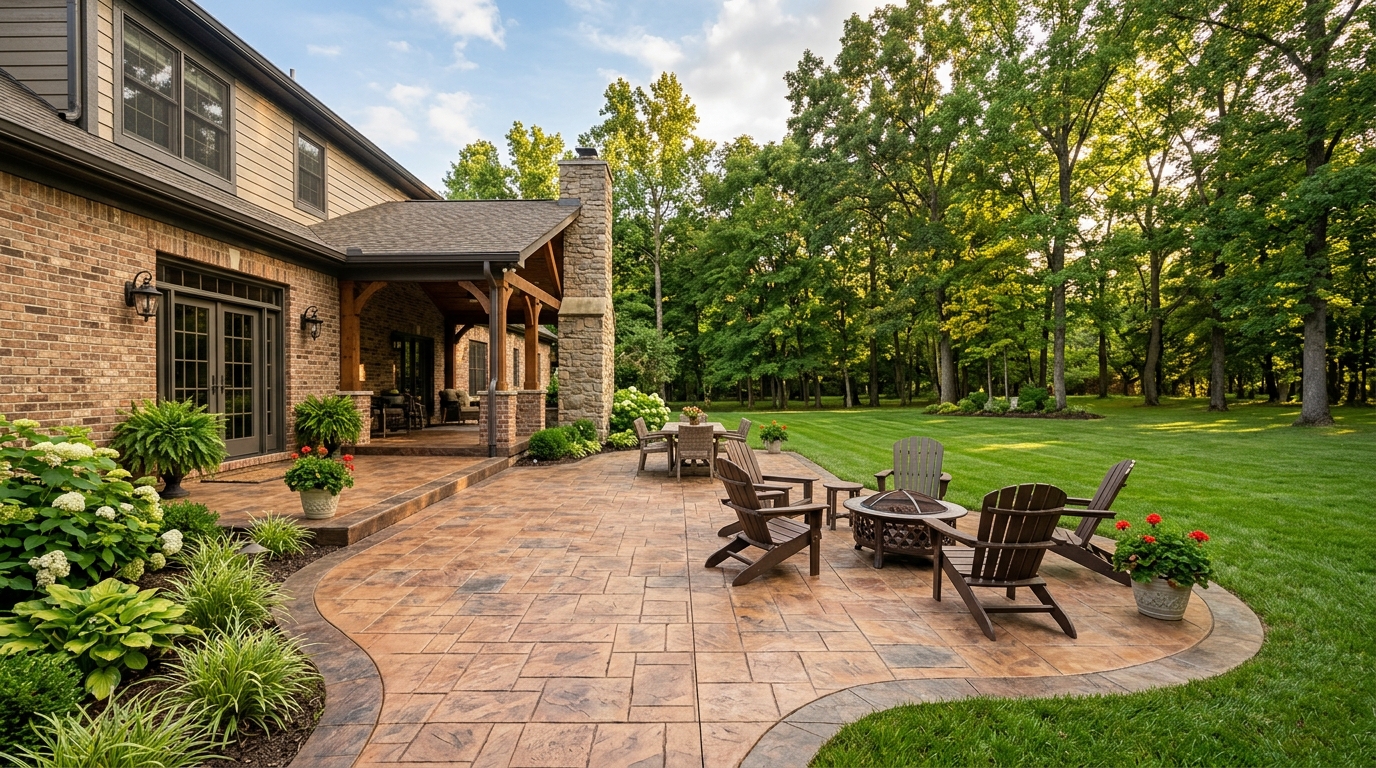
Concrete driveway cracking is almost never a problem with the concrete itself. The crack you're looking at started months earlier, as water in the soil, a freeze-thaw cycle, or a base that was never properly compacted. In other words, the slab didn't fail. The ground under it did. That distinction is everything: patch the surface of the concrete driveway and the crack comes back, fix what's underneath and it doesn't.
That's why CAG Enterprises starts every cracked-driveway repair call below the slab. After replacing hundreds of them across Central Kentucky since 2001, we can usually trace a crack to its root cause within a few minutes on site. It’s almost always caused by one of the three reasons we mentioned. Let’s go through all three factors, in the order we see them most, along with the fix for each.
Freeze-Thaw Cycles: The Biggest Driver of Cracking in Central Kentucky
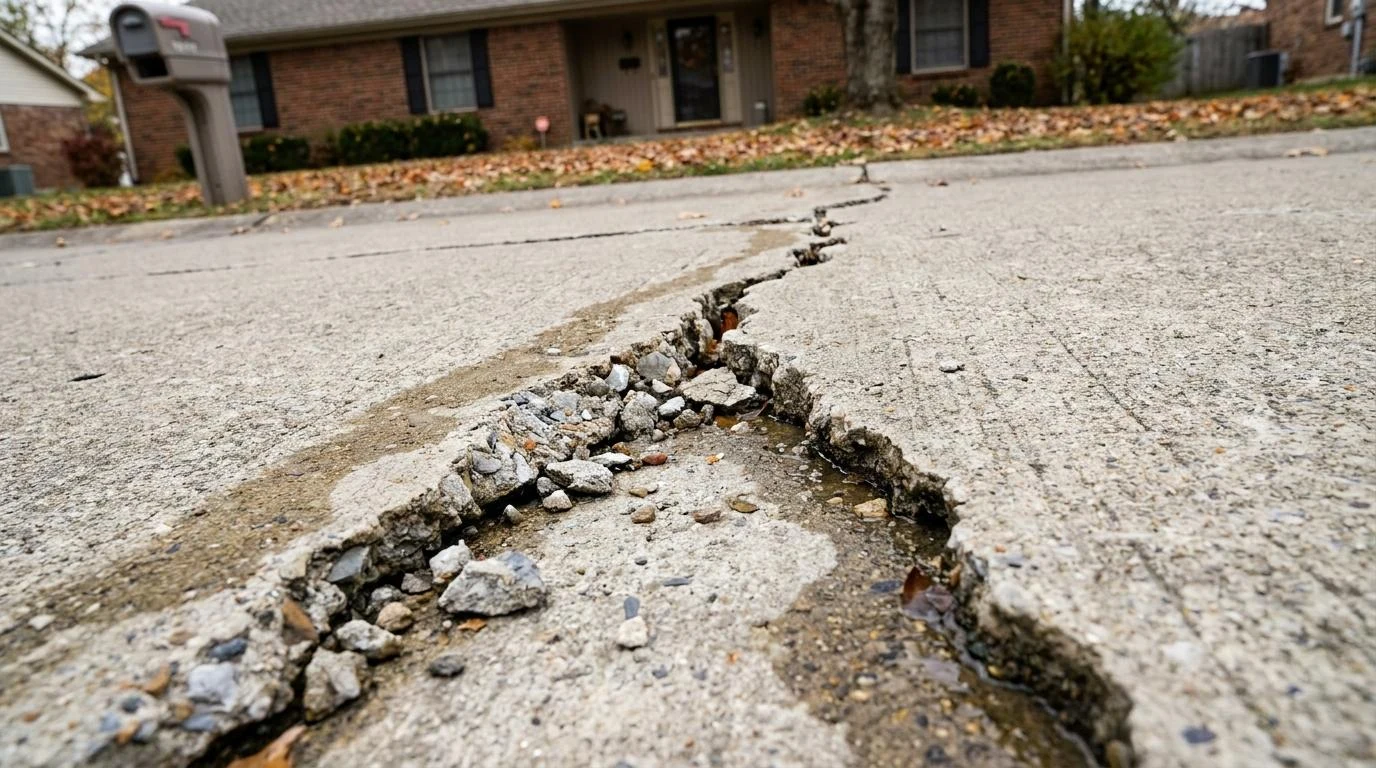
Kentucky's freeze-thaw pattern is uniquely aggressive: 40-degree temperature swings in a single day are common in March. Water seeps into concrete pores during a warm afternoon and freezes overnight, expanding by roughly 9% and micro-fracturing the cement paste. After a few winters, those micro-fractures become visible surface cracks.
Prevention starts with the mix. CAG specifies air-entrained concrete for every exterior pour, microscopic air bubbles that give freezing water room to expand without damaging the paste. Properly air-entrained 4,000 PSI concrete handles Central Kentucky's cycles for decades. Non-air-entrained concrete, common in older driveways, shows cracking within three to five winters. CAG's concrete services use air-entrained mixes on every exterior job.
Clay Soil and Subgrade Movement
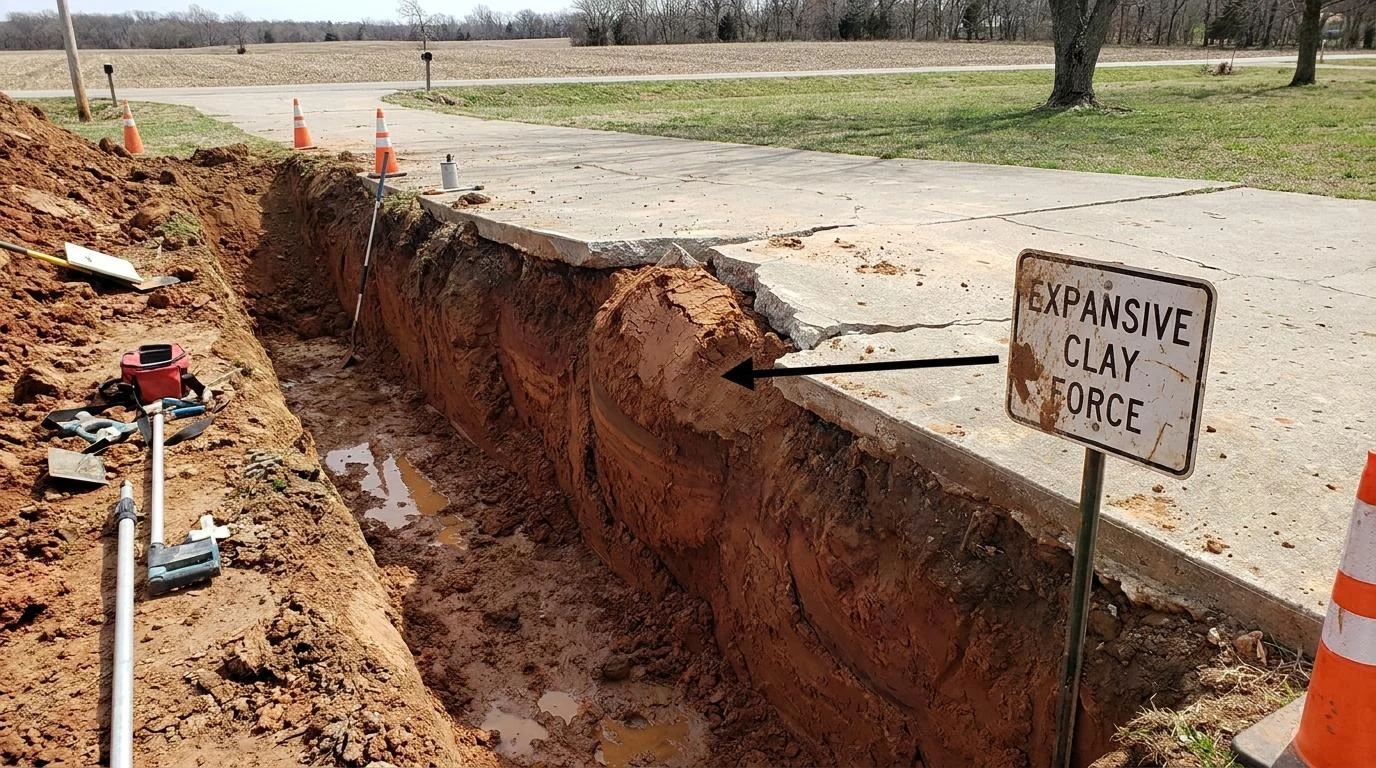
Central Kentucky sits on expansive clay, Maury silt loam and similar Bluegrass soils that swell when wet and shrink when dry. A slab poured too close to this active soil becomes a raft on a moving sea. When the subgrade shifts unevenly, the slab bridges the gap until it can't, then it cracks.
The secret to a durable driveway is the stone foundation underneath it. When clay soils absorb water and expand, they unevenly push up against the concrete, causing it to bend and snap. To prevent this, a tightly packed layer of crushed gravel is placed directly beneath the slab. This stone base acts as a solid, flat cushion that evenly distributes the weight of vehicles and lets water drain away before it can disrupt the concrete.
Because the foundation is so critical, CAG Enterprises treats driveway slab thickness and base depth as a single package tailored to Central Kentucky’s shifting soils. If your property sits on highly active clay, upgrading from a standard base to a 6-inch stone layer is a minor upfront expense that can add years of crack-free life to your driveway.
How Proper Installation Prevents Cracks Before They Start
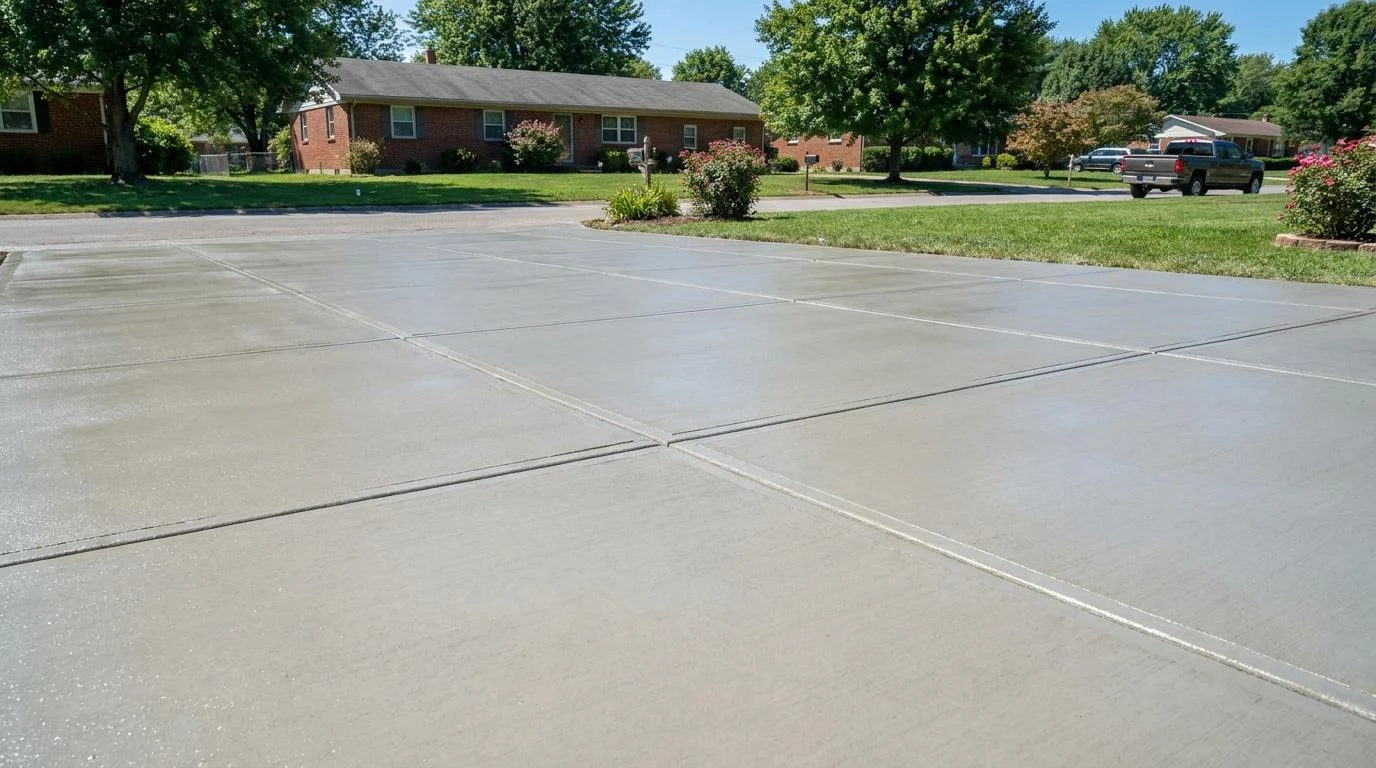
Control joints are the most cost-effective crack prevention tool: intentionally weakened planes direct cracking to a straight line you control rather than across the slab. Joints spaced every 8 to 12 feet handle normal shrinkage and thermal movement in a 4-inch driveway.
Reinforcement is the second line of defense. Welded wire mesh or rebar holds the slab together when the soil moves. When you combine proper steel reinforcement with regular concrete driveway maintenance (like sealing the surface every 3 to 5 years), a well-installed Central Kentucky driveway can easily reach a 30-year lifespan before its first structural crack.
Conversely, the concrete driveways that fail early almost always share the same pattern of shortcuts:
-
A poorly compacted gravel base
-
Completely missing steel reinforcement
-
Control joints cut too far apart
-
Skipping an air-entrained mix just to save a few dollars a yard
Frequently Asked Questions
Is it normal for a new concrete driveway to crack?
Small shrinkage cracks are normal in new concrete. These appear within the first month as the slab cures and loses moisture. Hairline cracks don't affect performance. Cracks wider than an eighth of an inch, cracks with vertical displacement, or cracks that keep widening after the first year aren’t normal. They signal subgrade movement, inadequate reinforcement, or a mix that wasn't air-entrained for freeze-thaw exposure.
How do you stop concrete from cracking in winter?
You can stop concrete from cracking in winter by preventing water from sitting on and seeping into the slab. Apply a penetrating silane or siloxane sealer every 3 to 5 years. Keep the driveway clear of standing water, avoid de-icing chemicals that accelerate spalling, and make sure control joints are clear of debris so water drains through them rather than pooling on the surface.
What causes concrete to crack after it dries?
Concrete that cracks months or years after curing is almost always cracking due to subgrade movement. The three causes in Central Kentucky are expansive clay soil that swells and shrinks, freeze-thaw cycling that expands water in the pores, and tree roots that grow under the slab. In each case, the crack is a symptom, but the cause is underground.
Stop Cracks Before They Start With a Kentucky-Ready Pour
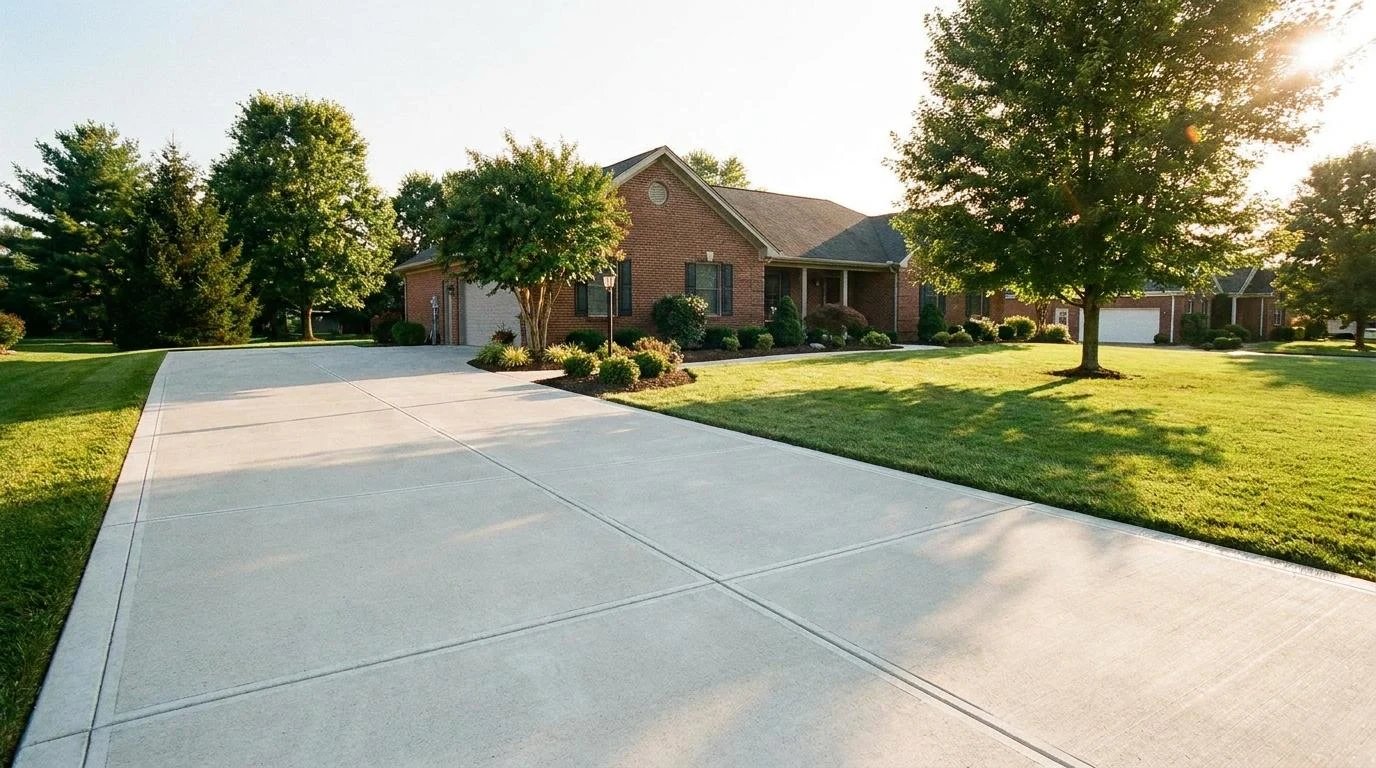
Driveways crack in our region for three reasons: water in the pores, movement in the soil, and corners cut during the pour. Handle all three with an air-entrained mix, a compacted stone base, and proper joints and reinforcement, and any cracking you get stays cosmetic instead of becoming structural. That's the whole approach. Build the base first, spec the mix for Kentucky's climate, and control where the cracks go.
If your driveway is already cracking and you're not sure whether it's cosmetic or structural, call CAG at (859) 983-5799 or ask for a free on-site assessment. We’ll tell you honestly whether it needs a patch, a sealer, or a new pour, and explain what's happening under the slab.