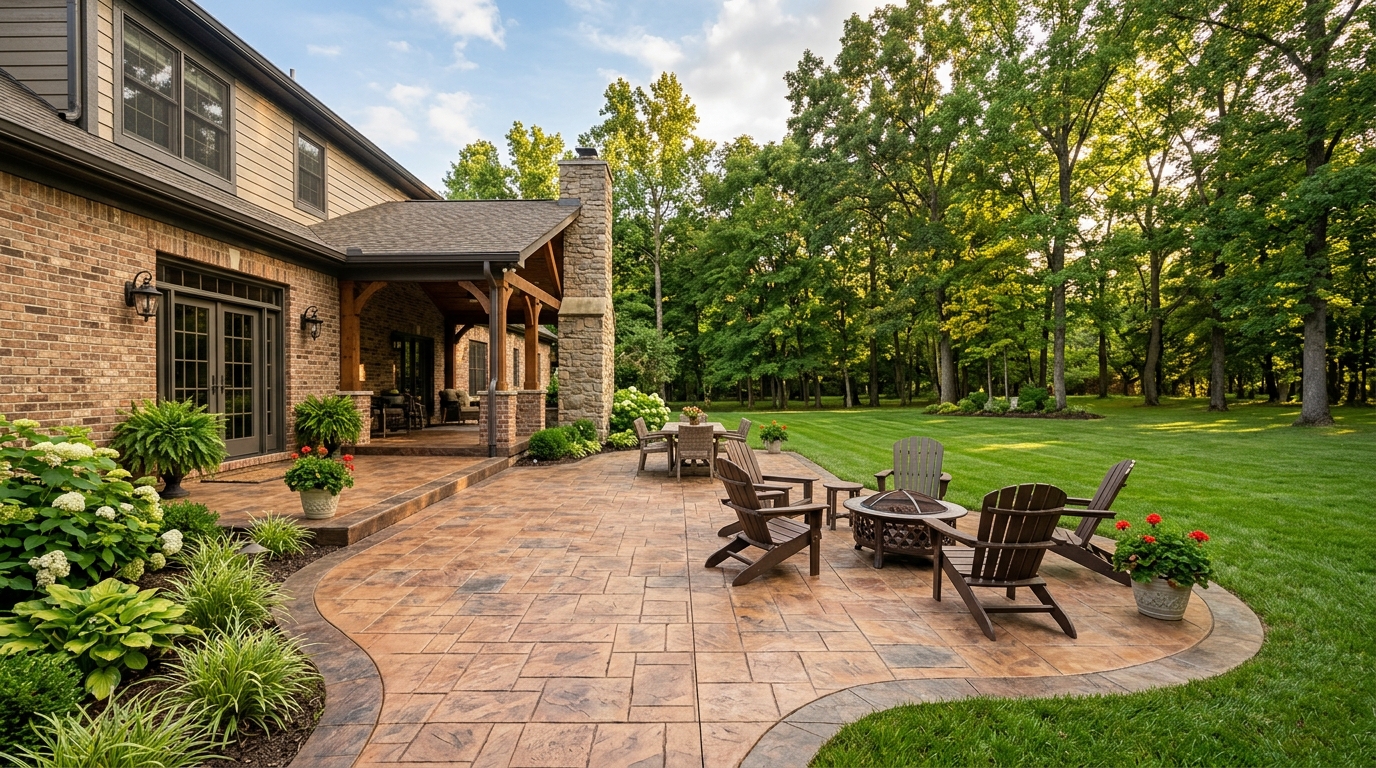
For most Central Kentucky homes, the right concrete driveway thickness is 5 inches. That's CAG's residential minimum—an inch over the national 4-inch baseline—and it's the spec we pour for cars, SUVs, and light pickup trucks. The extra inch isn't an upsell; it's an answer to local clay soil and freeze-thaw winters. If that's what parks in your driveway, you don't need anything thicker.
But thickness is only half the equation. A well-built 5-inch slab will outlast a thicker one poured over a weak base. That's especially true in Central Kentucky, where clay-heavy soil swells and shrinks with the seasons and pushes against whatever sits on top of it. It's the reason CAG Enterprises has followed the same rule since 2001: get the base right first, then pour the slab. In this article, we explain why CAG's 5-inch minimum makes sense for Kentucky, when to step up to 6 inches, and why what's under the concrete matters more than the number on top.
The 5-Inch Slab: CAG's Central Kentucky Minimum
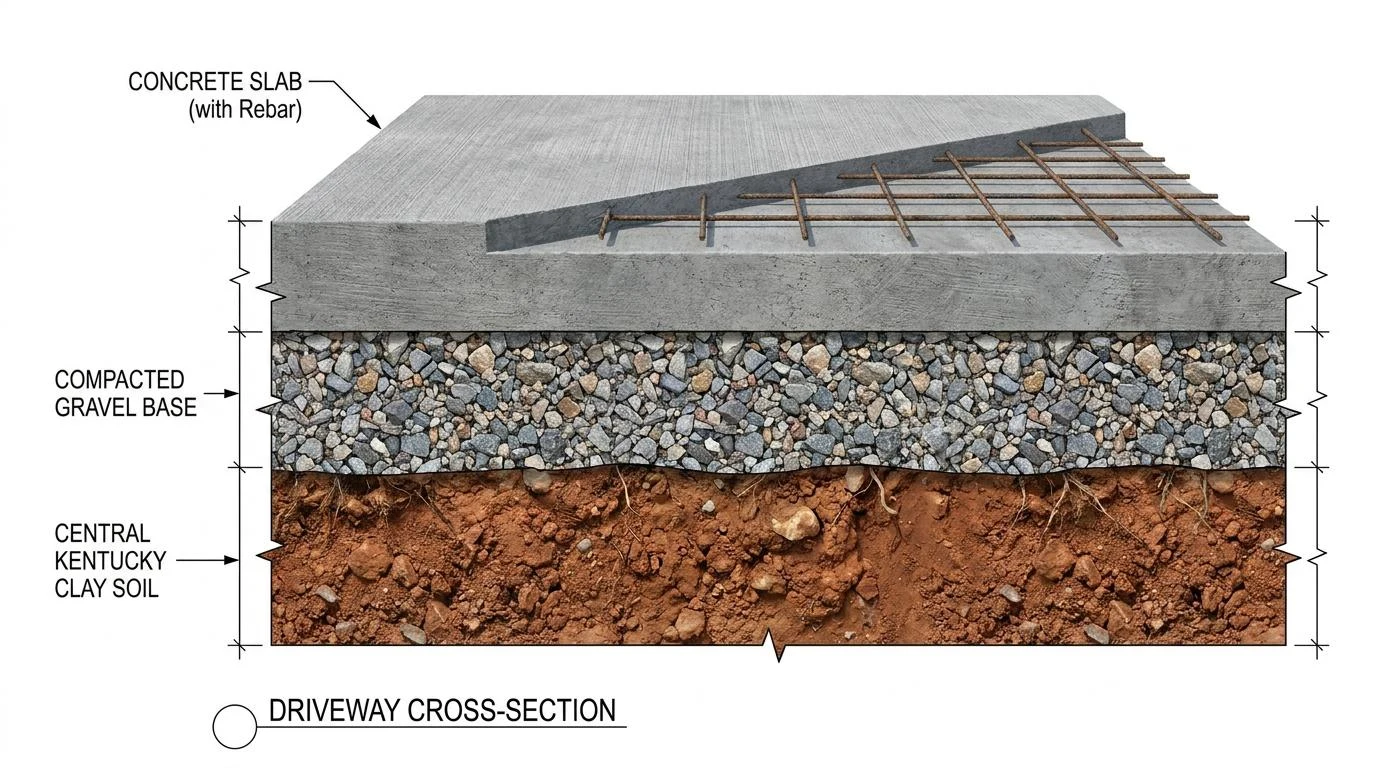
Four inches is the national baseline for driveways carrying cars, SUVs, and light pickup trucks, written into the IRC residential code. CAG pours 5 inches in Central Kentucky because of what local soil and weather throw at a slab every year. At 4,000 PSI, CAG's standard residential mix, a properly supported 5-inch slab carries normal car and light-truck loads with plenty of margin. The concrete itself isn't the weak point on a residential driveway.
What fails first on a residential driveway is the base. Central Kentucky's clay-heavy soil expands and contracts with moisture, and a thin or poorly compacted gravel base allows movement to telegraph into the slab. CAG's residential and commercial concrete services include a minimum 4-inch compacted stone base under every driveway, deeper on sites with heavier clay subsoil or poor drainage. The base separates the slab from the active soil zone and provides uniform support across the full footprint.
When 6 Inches Is the Right Call
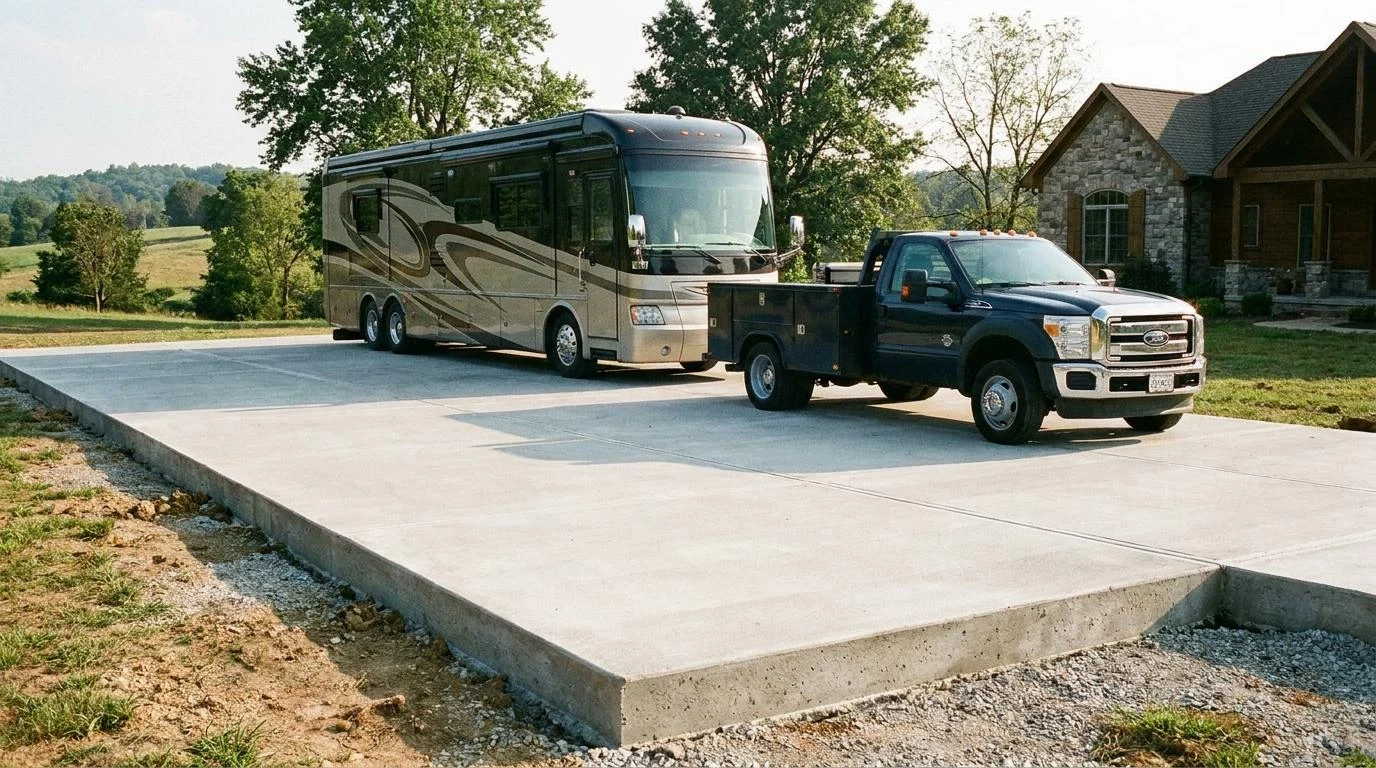
Step up to 6 inches when the driveway will see heavier vehicles regularly. RVs, work trucks loaded with tools or equipment, and trailers towing boats or campers all push past what a 5-inch slab is designed for.
Thicker concrete also buys you margin on the edges, where slabs are most vulnerable. Driveway edges take the brunt of freeze-thaw stress in Central Kentucky: water pools along the perimeter, freezes, and exerts pressure on the slab edge. An extra inch at the thickened edge adds decades to edge life. If you're weighing a full tear-out and driveway replacement, this is the point in the estimate where upgrading from 5 to 6 inches adds a few hundred dollars and buys years of service.
What's Under the Slab Matters More Than the Slab Itself
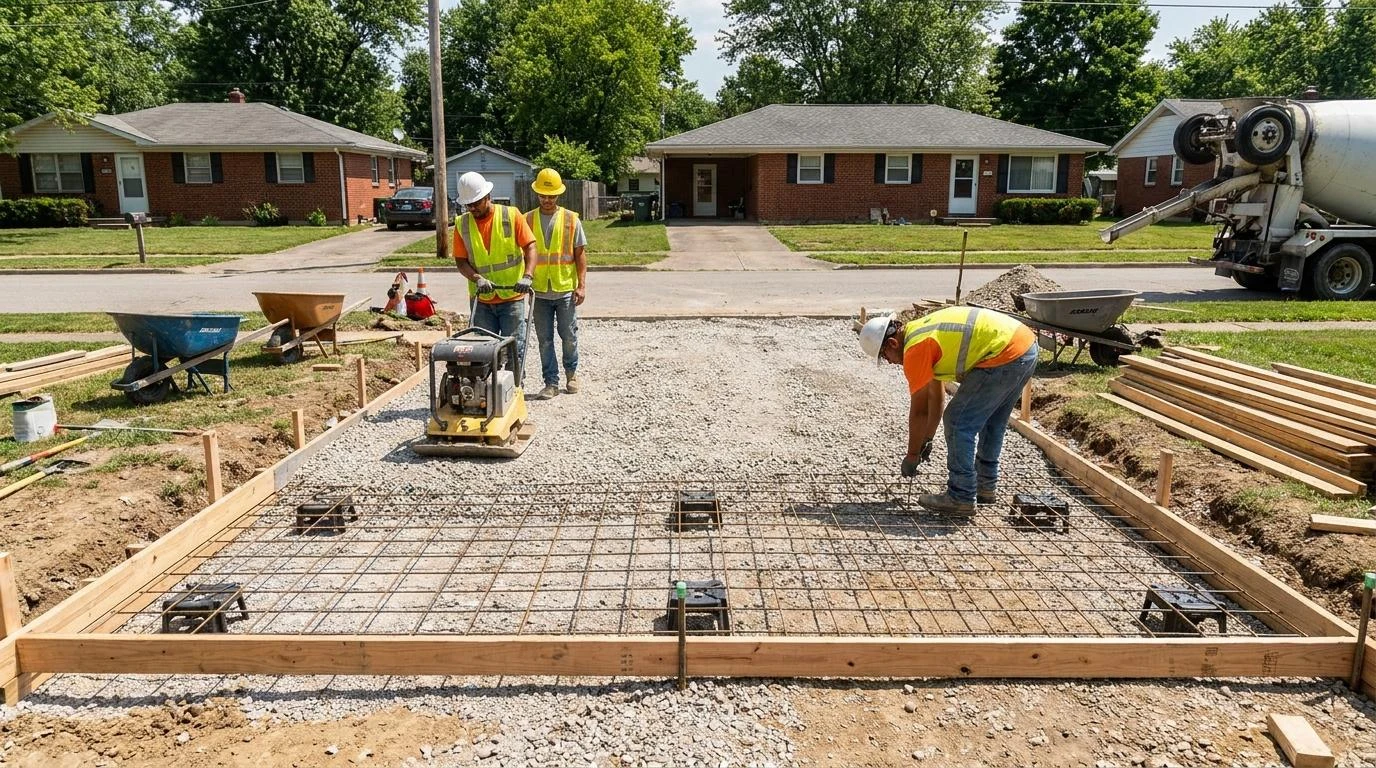
The sub-base, compacted granular stone under the concrete, makes or breaks a driveway in Central Kentucky's soil. Without it, seasonal clay expansion lifts and drops the slab unevenly, creating cracks.
Reinforcement is the second piece. CAG installs rebar or welded wire mesh in every driveway, which holds the slab together when the soil moves. Combined with a properly designed control joint layout, reinforcement is what keeps concrete driveway cracking to the joints, where it belongs rather than spider-webbing across the surface. For Central Kentucky's freeze-thaw cycles and expansive clay, a 5-inch slab on a proper stone base with wire mesh reinforcement consistently outlasts a thicker slab on a thinner base.
Frequently Asked Questions
Is thicker concrete less likely to crack?
Thicker concrete reduces the risk of cracking only if the sub-base is properly prepared. A 6-inch slab on a poorly compacted base cracks just like a 5-inch slab. In Central Kentucky's expansive clay, a well-compacted granular base under a reinforced 5-inch slab with control joints resists cracking better than a thicker slab on a skimpy base.
Do you need gravel under a concrete driveway?
Yes, a compacted gravel or crushed stone base is essential under a concrete driveway, especially in Central Kentucky. The granular base drains water, provides uniform support that bridges minor soil movement, and separates the concrete from the active clay layer that swells and shrinks seasonally. CAG installs a minimum 4-inch compacted stone base under every driveway.
What PSI concrete should a driveway be?
A residential concrete driveway should be poured at 4,000 PSI minimum. This is the standard mix CAG Enterprises specifies for every driveway pour, it provides sufficient compressive strength for passenger vehicles and light trucks while balancing workability and finish quality. Lower PSI mixes (3,000 to 3,500) save a few dollars per yard but lose durability faster under freeze-thaw cycling. For driveways carrying heavy trucks or commercial traffic, CAG steps up to 4,500 or 5,000 PSI, depending on the load.
Get the Base Right and the Concrete Takes Care of the Rest
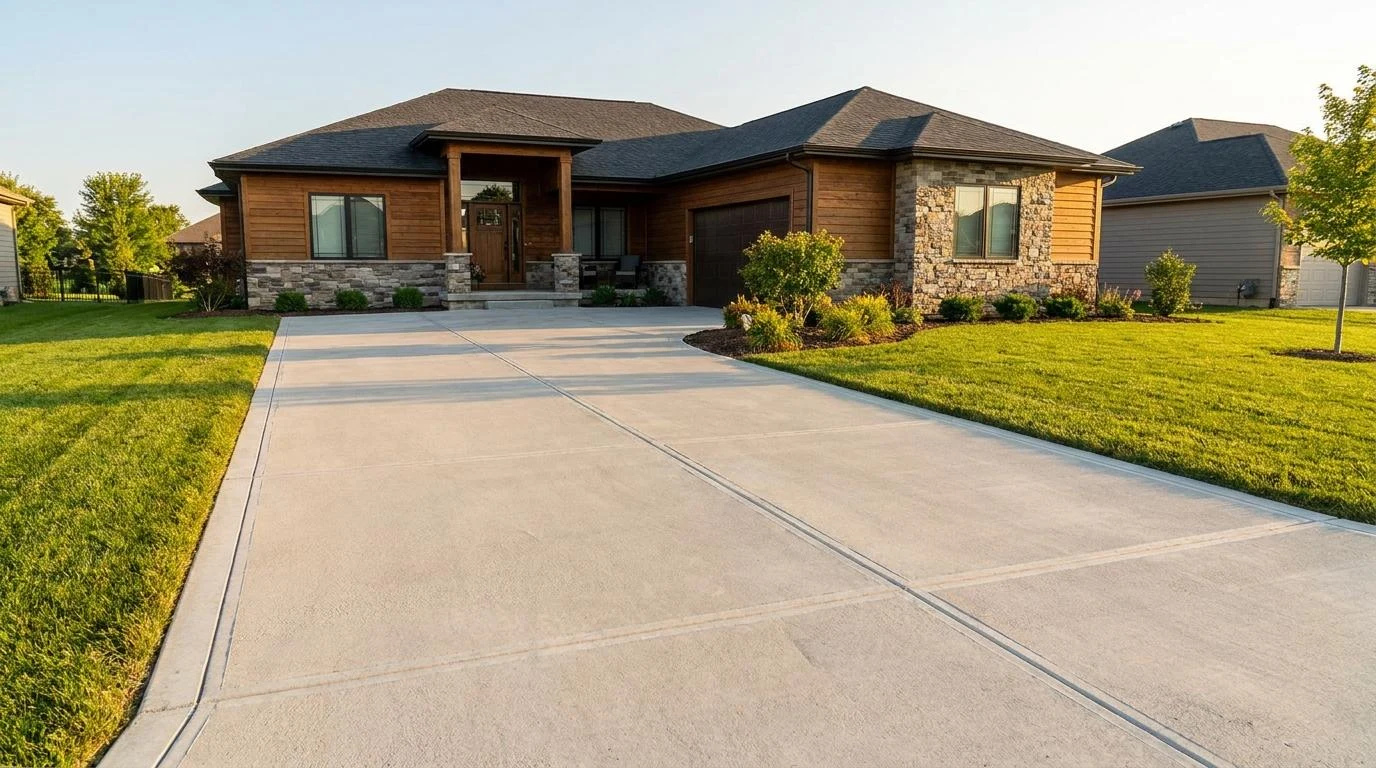
Five inches of properly reinforced concrete handles a family driveway in Central Kentucky. Add an inch for RVs or work trucks, and distribute the control joints correctly. Get those right and you've covered the slab. What's left, and what actually determines whether your driveway lasts, is the compacted stone base underneath it. That's where the money is best spent.
For a free estimate on a new concrete driveway, call CAG Enterprises at (859) 983-5799 or visit our contact page. Our team will walk the site, measure the grade, and put the slab thickness, base depth, and reinforcement in writing, spec'd for what actually parks on it.