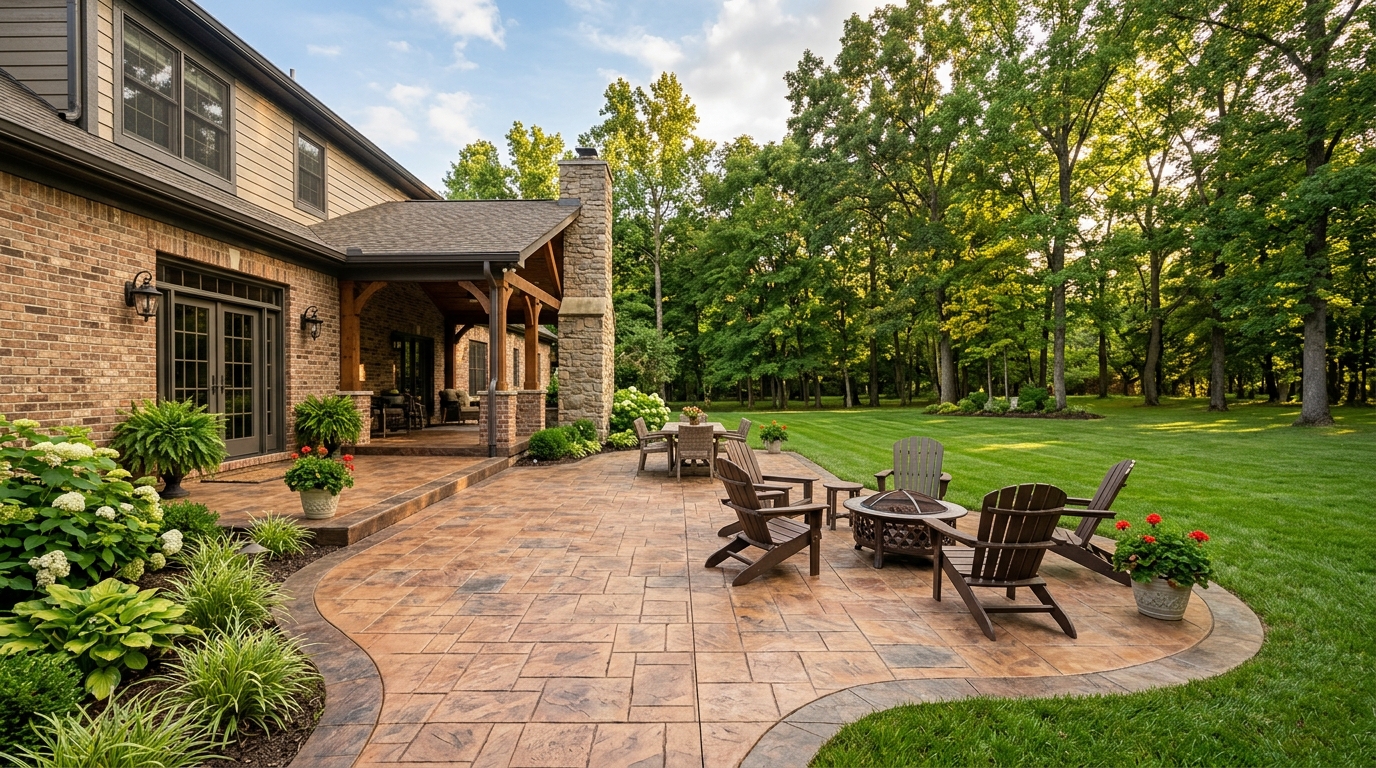
You can fix a cracked concrete driveway with polyurethane filler or patching compound for cracks under a quarter-inch wide. Wider cracks, settling slabs, and crumbling edges usually point to subgrade failure that a surface patch won't solve. CAG Enterprises has torn out and replaced hundreds of driveways across Central Kentucky. Our crew assesses cracked driveways every week, and the right call usually comes down to one question: is the slab moving, or is the surface just shrinking?
What throws most homeowners isn't the crack itself. It's not knowing whether a $15 tube of filler is enough or whether the whole driveway needs to come out. Which types of cracks can be patched and which cracks indicate that it's time for a new pour? We explain them both in this blog post.
Small Cracks and Hairline Fractures: What You Can Fix Yourself
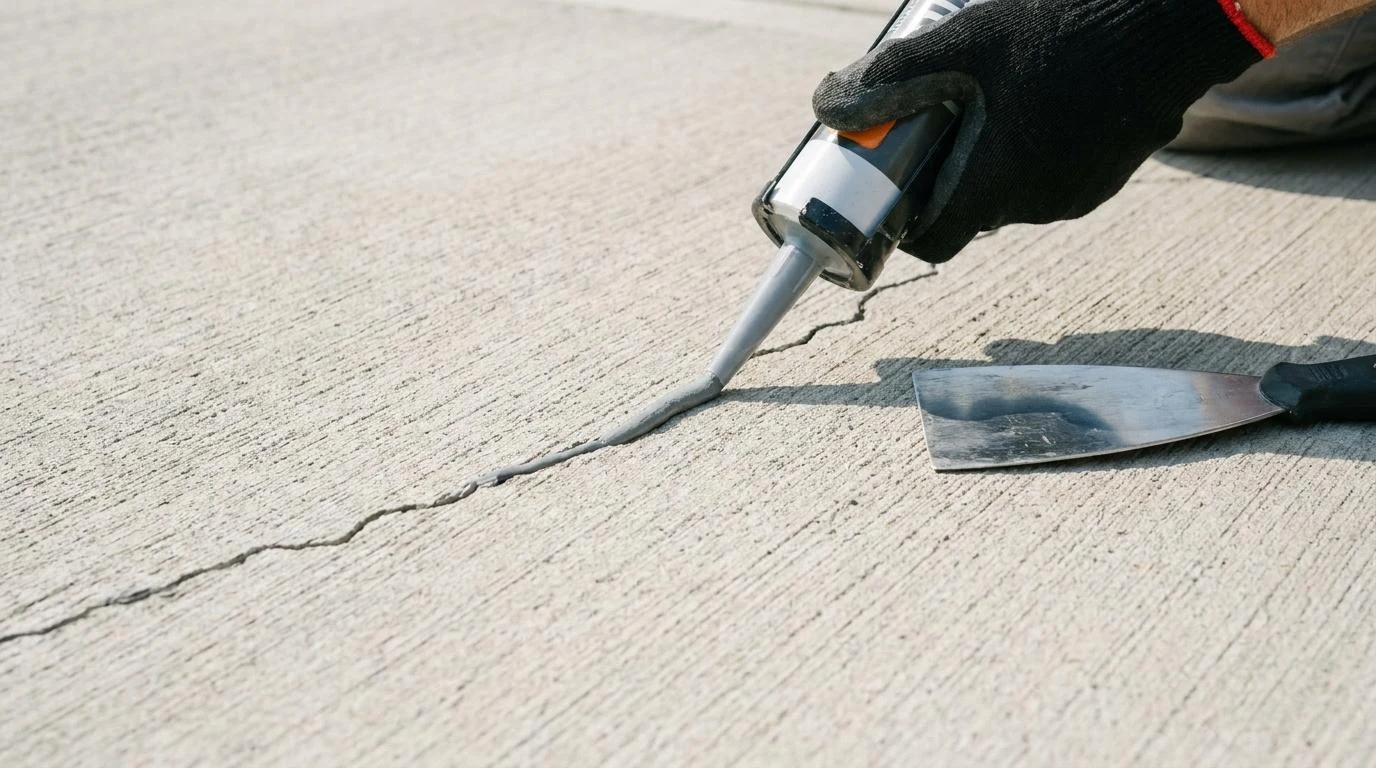
Hairline cracks under an eighth of an inch and narrow cracks up to a quarter-inch are usually shrinkage-related, meaning the surface cured faster than the concrete below it. These don't threaten the slab's structure and can be filled in under an hour.
The repair sequence matters more than the product. Clean the crack with a wire brush and pressure washer, let it dry completely, then inject a polyurethane crack filler or force patching compound into the crack with a trowel. For cracks near a quarter-inch, undercut the edges slightly so the patch locks mechanically rather than sitting on top. CAG’s concrete services include professional crack assessment, but a homeowner with the right materials can handle these surface-level fixes.
When a Crack Signals a Bigger Problem Under the Slab
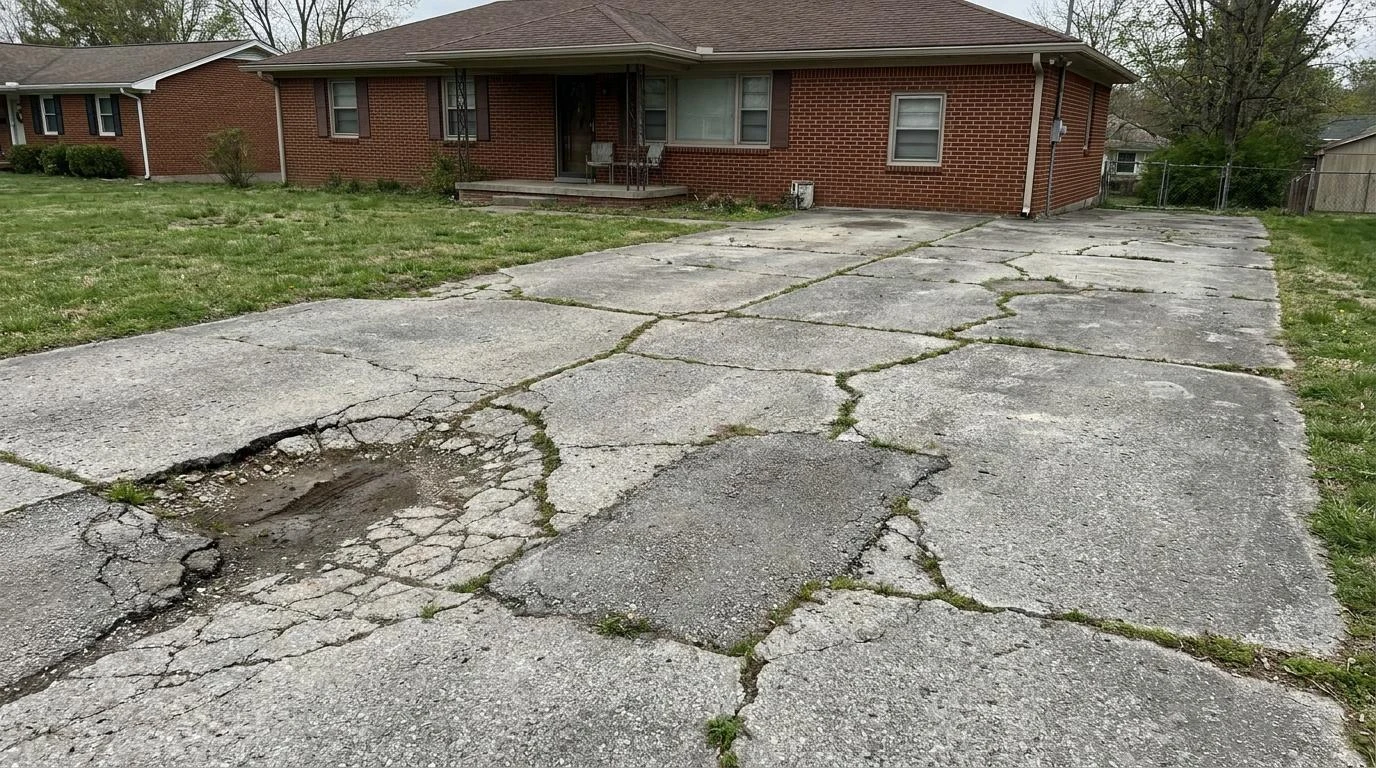
Cracks wider than a quarter-inch, cracks where one side has lifted or settled, and multiple radiating cracks from a central point all signal subgrade failure. The soil underneath has shifted, washed out, or was never properly compacted. A surface patch on shifting soil lasts one season.
Central Kentucky's clay-heavy soil makes this common. Maury silt loam and similar Bluegrass soils expand when wet and shrink when dry, cycling the slab through seasonal movement that opens new cracks every year.
Assessing cracks in the driveway always begins with what’s going on underneath the slab. If the edges are crumbling or the slab has dropped more than half an inch, repair becomes a temporary measure.
Repair vs. Replace: How to Make the Call
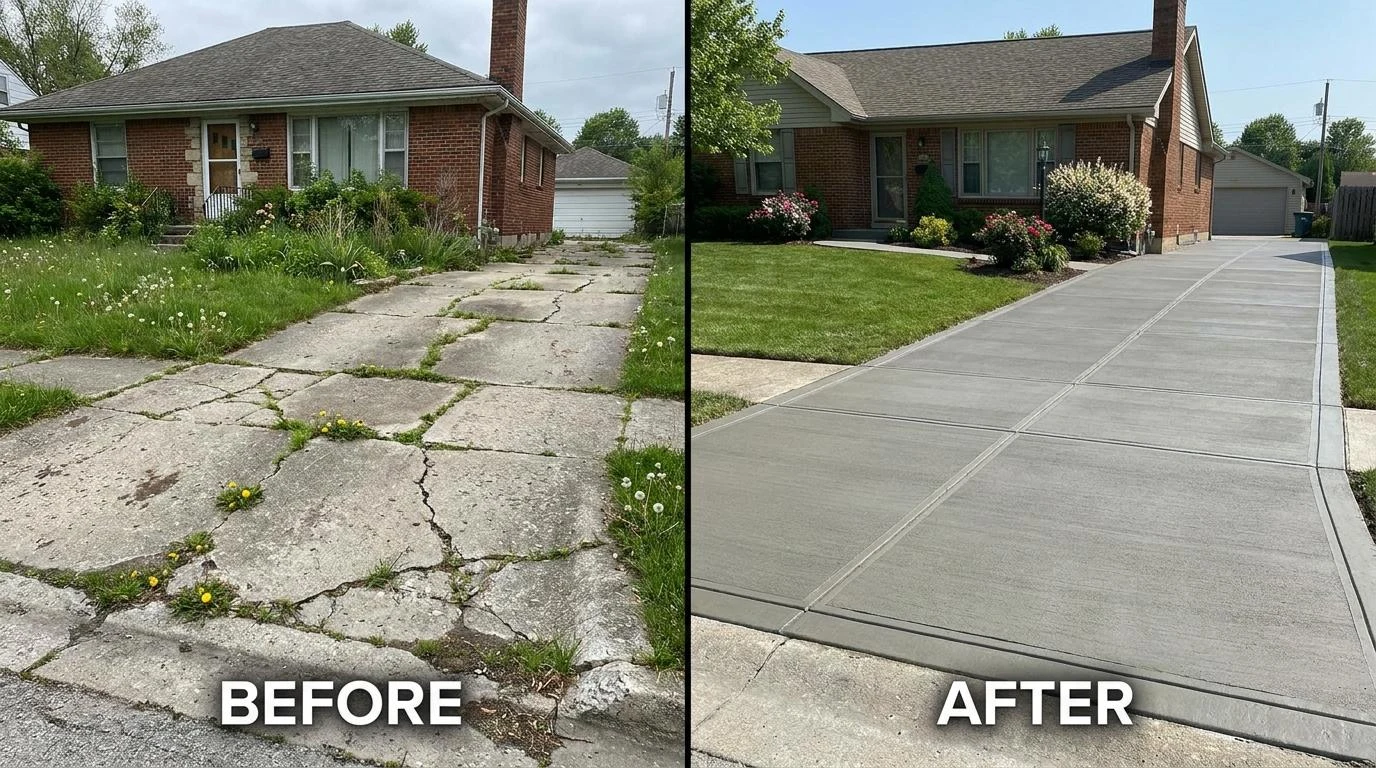
The repair-or-replace decision comes down to crack width, slab settlement, and how much of the driveway is affected. A single hairline crack on a solid slab is a repair. Multiple wide cracks across more than 30% of the surface, or settlement over an inch, points toward replacement.
A tube of filler costs $10 to $20. Epoxy injection runs $300 to $800. Full tear-out and replacement in Central Kentucky typically runs $4,000 to $12,000 depending on size and finish. Our guide on driveway replacement cost reveals the full scope: tear-out, haul-off, subgrade prep, steel reinforcement, pour, and cure. If you're spending more than half the cost of a new driveway on patches, replacement is the better long-term move.
Frequently Asked Questions
Can a cracked concrete driveway be repaired?
A cracked concrete driveway can be repaired if the cracks are narrow, the slab hasn't settled, and the subgrade is stable. Hairline cracks under an eighth of an inch can be filled with polyurethane crack filler. Cracks up to a quarter-inch can be patched with undercut edges for a mechanical lock. Wider cracks with vertical displacement signal subgrade failure, so surface repair on shifting soil won't last.
How do you fix a crumbling concrete driveway?
A crumbling concrete driveway, where the surface is spalling or edges are breaking apart, typically needs more than a patch. Small spalled areas can be resurfaced with a polymer-modified overlay if the slab underneath is sound. Widespread crumbling usually means the concrete was poured too wet, finished too early, or damaged by freeze-thaw cycles. CAG Enterprises recommends full tear-out and replacement with a properly air-entrained mix in those cases.
When should I replace my concrete driveway instead of repairing it?
Replace your concrete driveway when cracks cover more than 30% of the surface, the slab has settled more than an inch, or cumulative repair costs exceed half the price of a new pour. In Central Kentucky, freeze-thaw cycles and clay soil accelerate deterioration once the slab loses structural integrity. A driveway with one or two isolated cracks can be repaired. A web of interconnected cracks with visible settlement has run its course.
Know When to Patch and Replace Your Driveway
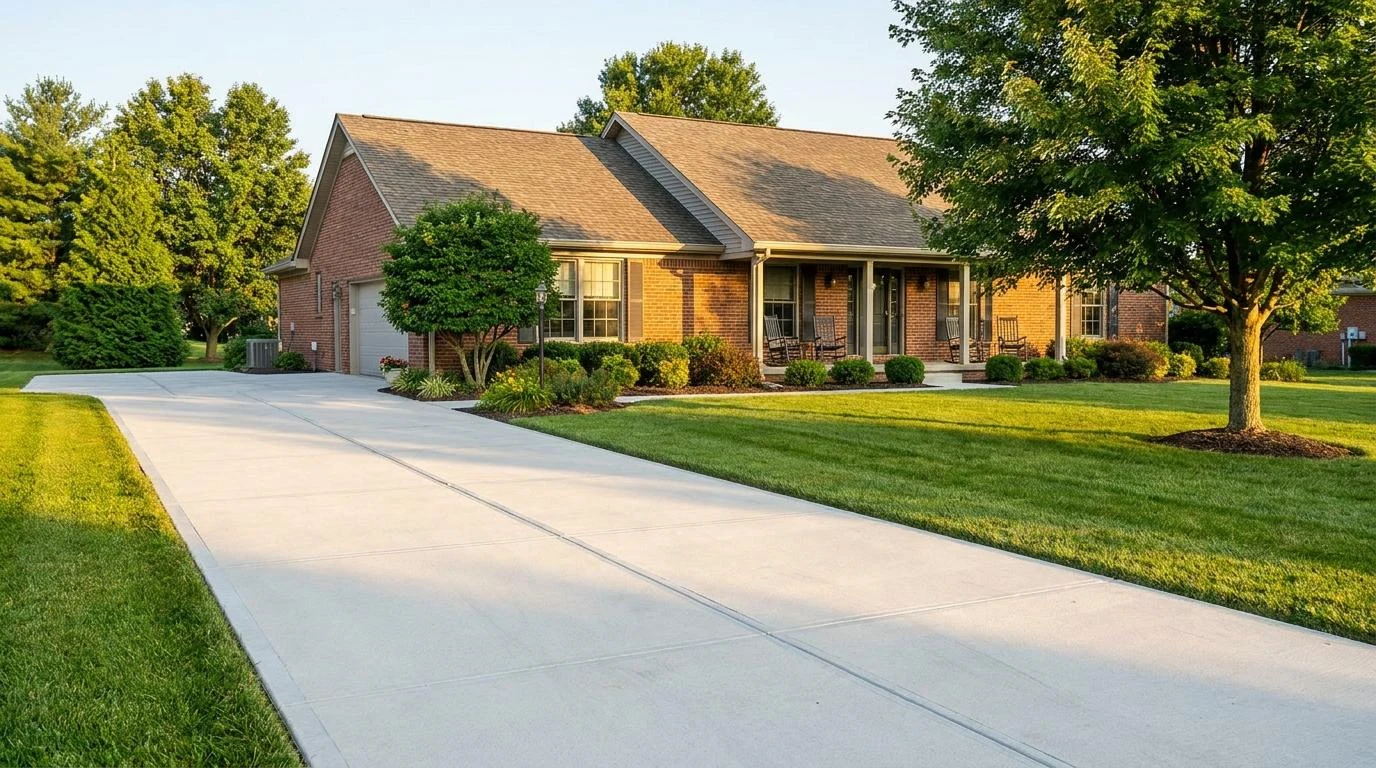
Most cracks aren't emergencies; a hairline here, a shrinkage crack there, those are cosmetic. What separates a weekend fix from a full replacement is what's happening underneath the slab. In Central Kentucky's clay soil, that's the question that answers all the others. CAG Enterprises has been helping homeowners across Lexington, Georgetown, and the Bluegrass counties determine the difference and apply the right fixes for their driveways since 2001
If your driveway has a crack you're not sure about, call (859) 983-5799 or ask for a free, no-obligation site visit. Our team will walk the driveway with you, tell you honestly whether it's a patch or a pour, and put the numbers in writing.