Standing water, pooling near the garage, or a puddle that never seems to dry can mean more than a cosmetic nuisance. On a Lexington driveway, drainage issues are often tied to the ground underneath the slab. Central Kentucky's clay soil and seasonal freeze-thaw swings can turn a minor slope problem into cracking, settlement, or a driveway that is directing water toward the house instead of away from it. This guide breaks down the most common causes behind driveway drainage problems in Lexington, how to tell whether the fix is simple or structural, and what a proper repair or replacement actually involves.
Why Water Pools on or Near a Concrete Driveway in Lexington

Most driveway drainage problems trace back to one of a few root causes: incorrect slope, a settled or sunken section of slab, or water reaching a base that no longer provides solid support. Once water finds its way beneath the surface, Lexington's soil and climate conditions can make the problem worse over time.
- Central Kentucky's clay soils can swell when saturated and shrink as they dry. When that movement happens unevenly beneath a driveway, cracking and settlement can follow, and the puddle or crack you notice on the surface may be a symptom rather than the root problem.
- Freeze-thaw cycles common to the Lexington area can make water-related damage worse. When moisture sits in concrete pores, joints, or existing cracks and then freezes, it can expand and widen the damage.
- Poor grading, a sunken slab, or a base that has lost support can route water toward the home instead of away from it, which is a different problem than a surface that simply needs better slope.
Surface Problem or Something Deeper? How to Tell the Difference

Not every drainage issue calls for the same fix. A driveway that is simply pitched the wrong way may only need a runoff correction. A driveway that is cracking, heaving, or sinking is usually telling you the problem started below the surface. Treating the visible crack without diagnosing the soil, base, or drainage condition underneath it can leave the original cause in place, which means the same puddle or crack is likely to return.
Control joints are a useful reference point here. They are designed to manage normal shrinkage and thermal movement in the slab, but they do not correct an unstable subgrade or an improper runoff path. If joints are intact but water and cracking persist, the issue is more likely tied to what is happening beneath the concrete.
A few signs point toward a problem that deserves a professional evaluation rather than routine upkeep:
- New or widening cracks
- Vertical displacement between slab sections
- Noticeable settlement or a sunken area
- Large spalled or broken-up areas
- Water pooling against the foundation
For more on how these signs connect to clay soil movement, see why concrete driveways crack in Central Kentucky.
What a Proper Repair or Replacement Addresses
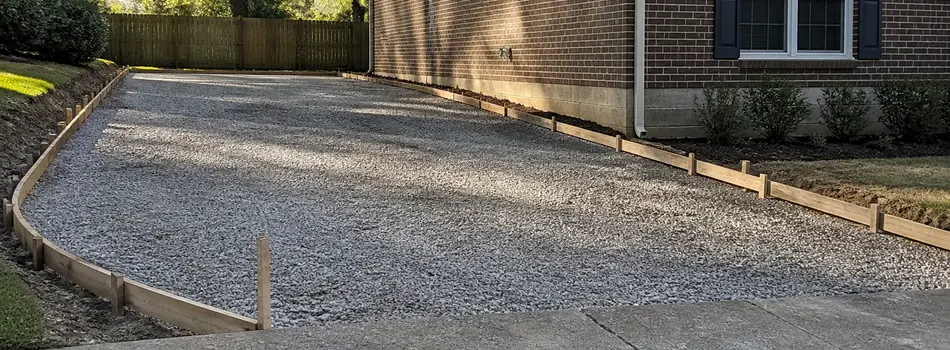
When a driveway's drainage problem is tied to a failed base or an unstable subgrade, a durable fix needs to address what is underneath the slab, not just the surface. CAG Enterprises' driveway process includes excavating down to stable subgrade below the Bluegrass clay layer, compacting a granular base in lifts, adding reinforcement, and pouring a minimum 4-inch slab, with grading set to carry water away from the foundation. A compacted stone or granular base also helps distribute the weight of vehicles and gives water a path to drain before it can disrupt the slab again.
You can see more on how this process is applied to driveway installation on the concrete driveways in Lexington, KY page.
What to Expect If Replacement Is Needed
If an evaluation shows that replacement is the right path, most residential driveway projects run 2 to 4 days from tear-out through the finished surface. After that, plan on keeping foot traffic off the new concrete for about 7 days and vehicle traffic off for about 28 days while it cures. Knowing these timeframes ahead of time makes it easier to plan around the work.
Once a new driveway is in place, a little seasonal attention, such as keeping joints clear and addressing water entry before freezing weather, can help protect it. More tips are available in the year-round Lexington driveway maintenance guide.
Frequently Asked Questions
How can you tell whether driveway puddling is caused by poor slope or a settled slab?
Look at whether the water sits in one low spot on an otherwise flat, intact surface, which often points to slope, or whether the pooling is next to visible cracking, displacement, or a sunken section, which points to a settlement or base problem.
When is a cracked or sunken driveway a drainage problem that needs more than sealing or patching?
When you see new or widening cracks, vertical displacement, noticeable settlement, large spalled areas, or water pooling against the foundation, the issue is likely coming from below the slab and calls for an evaluation rather than surface patching.
How long should a replacement driveway stay free of foot and vehicle traffic?
Plan on about 7 days before foot traffic and 28 days before vehicle traffic to allow the new concrete to cure properly.
Get a Local Evaluation for Your Lexington Driveway
If your driveway in Lexington or the surrounding Central Kentucky area is holding water, cracking, or showing signs of settlement, CAG Enterprises offers a free, no-obligation estimate with an on-site visit within 48 hours and a detailed written quote with no hidden fees. Call (859) 983-5799 to schedule your evaluation and find out whether your driveway needs a drainage correction or a full replacement.